Douglas Original Mattress Review: Is It Worth The Hype?



Product Research: Our Process

Douglas Original: Is It Worth The Hype?
Our Verdict
Douglas Original: Is It Worth The Hype?


Table of Contents
Mattress Sizes & Prices
| Size | Price | Dimensions |
|---|---|---|
| Twin | $599 | 38″ x 75″ x 10” |
| Twin XL | $649 | 38″ x 80″ x 10” |
| Full / Double | $699 | 53″ x 75″ x 10” |
| Queen | $799 | 60″ x 80″ x 10” |
| King | $899 | 76″ x 80″ x 10″ |
| California King | $899 | 72″ x 84″ x 10” |
| Split King | $1298 | 76" x 80" x 10" |
Purchasing and Returns
Unboxing and First Impressions
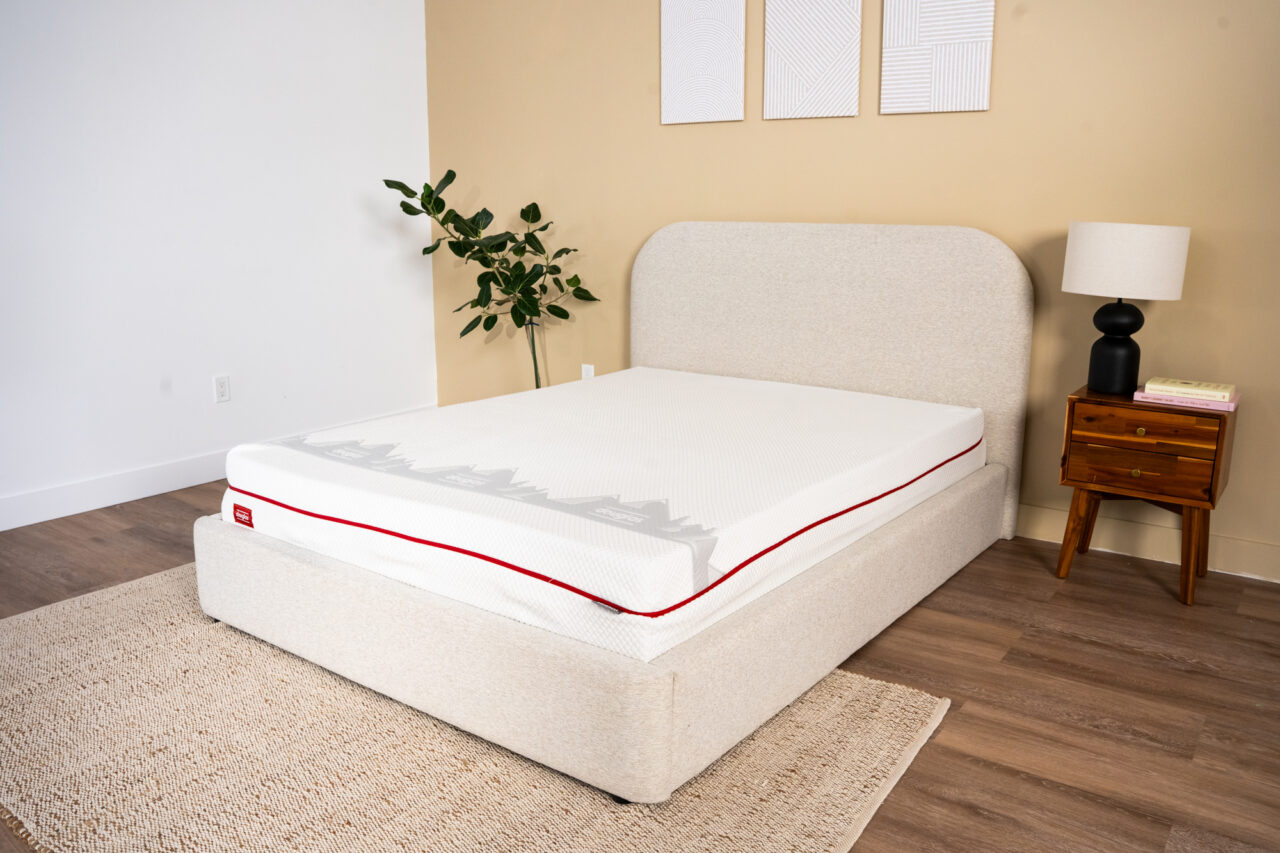
The Douglas Original arrived at my doorstep in a compact box that was noticeably beat up upon delivery. This foam mattress took 30–40 minutes to expand to its full form — slower than most comparable new mattress options — and did not feel stable enough to sleep on the first night, so I gave it 48 hours before testing.
In our Spring 2025 tests, the Douglas Original had an off gassing-like smell that persisted for 19 days. We did not measure VOC emissions directly, so the mattress may have stopped off gassing earlier — but if you’re sensitive to smell, this is a meaningful consideration when planning your first sleep on a new mattress. Placing the mattress in a well-ventilated room and using a mattress protector immediately can help manage this. By comparison, off gassing on Canadian-made alternatives like Endy dissipates far more quickly in our testing.
Construction

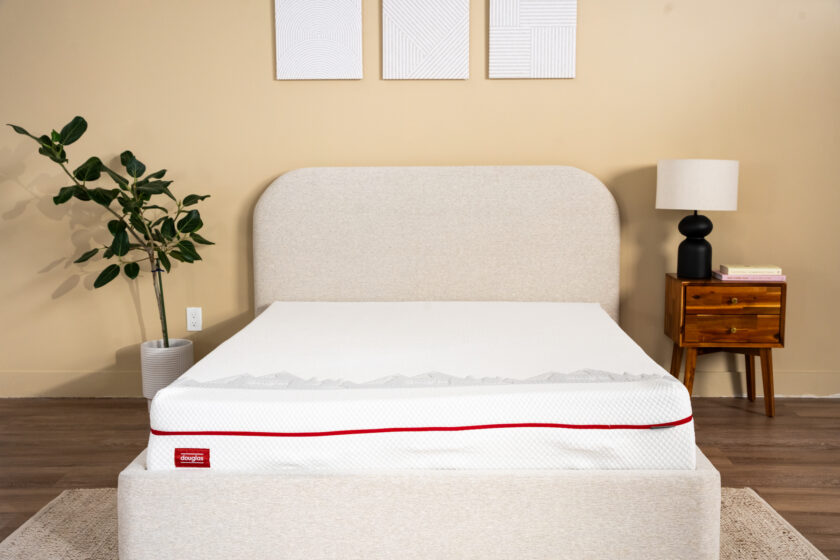
The Douglas Original is built with three layers of foam beneath a machine washable cover — a relatively straightforward all foam mattress construction. While Douglas uses sustainable materials and sources some components from renewable wood sources as part of their broader environmental commitments, material quality alone does not guarantee sleep performance — and the Douglas Original’s construction reflects some meaningful compromises for the price point.
1. Douglas CoolSense® Cover (Machine Washable Cover)
The top layer mattress cover is machine washable and manufactured with cooling technology-infused nanofibers meant for heat dissipation and temperature regulation. While a machine washable cover is a practical feature, this top layer cooling technology alone does not adequately address heat retention for hot sleepers — as our testing confirmed, the Douglas Original still runs warmer than comparable foam mattress options. Adding a mattress protector under the machine washable cover is recommended to extend its lifespan.
2. 2″ ecoLight® Cooling Gel Foam + Polar® Temperature Balancing (Comfort Layer)
This comfort layer combines cooling gel foam and a Polar® cooling technology system meant to regulate temperature. The gel foam is designed to draw heat away from the body, but in practice, we found the cooling gel foam layer insufficiently effective for hot sleepers who need consistent overnight heat dissipation. This comfort layer also serves as the primary balanced pressure relief zone — though with a pressure relief score of just 5/10, it underperforms relative to similarly priced memory foam options.
3. 2″ Premium Elastex® Foam (Middle Layer / Comfort Layer)
The middle layer is a body-contouring memory foam using traditional memory foam-adjacent Elastex® technology. This second comfort layer provides additional balanced support and body contouring, though it contributes to the enveloping, low-bounce feel that many Douglas customers have flagged. The three layers of foam in the Douglas Original are thinner in total than the Douglas Summit Mattress and comparable foam layers in higher-rated alternatives.
4. 6″ Motion Isolation Support Foam (Bottom Layer)
The bottom layer is the foundational support foam — a 6″ base that provides the support structure for the entire mattress. While this support foam layer delivers reasonable durability, it does not incorporate the gel foam or zoned elements found in the support layers of higher-performing foam mattress options. The bottom layer also contributes to the excessive sinkage we observed, particularly near the edges.
Comfort
The entire Douglas mattress range offers a broadly similar construction, with the Douglas Original featuring slightly less foam depth than its pricier alternatives like the Douglas Summit. Personally, I do not like the feeling of being enveloped or cradled on a mattress, and when I slept on the Douglas, I could certainly relate to common customer complaints about how soft this mattress was. The foam layers create a comfortable bed experience for lighter sleepers, but the lack of perfect bounce and balanced support makes this a difficult recommendation for anyone seeking a genuinely responsive sleep surface.
Firmness
This mattress scores 6/10 on our firmness scale — positioned as medium firm, though in practice it sleeps considerably softer. As a 127lb woman, I observed deeper sinking on the Douglas than on similar mattresses, like the Endy Original. The foam composition leans toward the soft end of medium firm, which may disappoint sleepers expecting a genuinely firm sleeping surface.
If you’re like me and prefer a firm mattress, consider Endy or Silk & Snow, as both offer firm versions of their all foam mattress with more reliable proper spinal alignment and balanced support. The Douglas Summit Mattress offers a somewhat firmer profile within the Douglas lineup, but even that comes with caveats compared to the consistently firm options from Canadian competitors.
Motion Transfer
Memory foam mattresses are usually praised for motion isolation — however, the Douglas Original did not particularly excel in this area. During tests in our sleep lab, there was significant movement in the water vessel when the sleep tester got in and out of bed. If you share your bed with someone, you may want to look at the Endy Original, which delivers superior motion isolation and a 10/10 score in our testing by comparison — meaning you can barely feel a partner’s movements during the night.
The Douglas’s foam layers absorb some motion transfer, but not to the level that most sleepers sharing a bed would find satisfactory. This was a consistent finding in our testing and aligns with a meaningful volume of negative customer reviews about motion transfer on this mattress.
Cooling
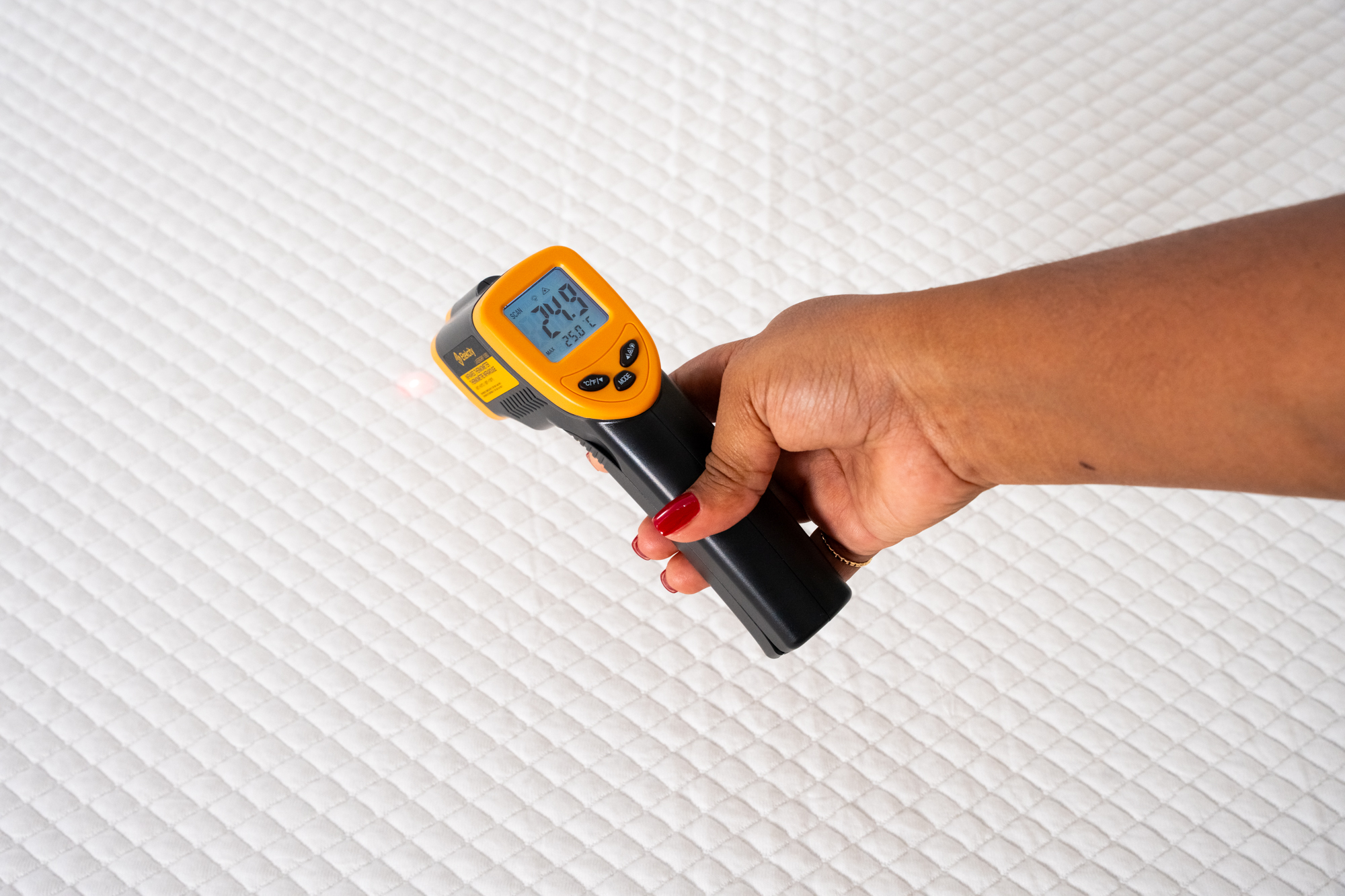
Some of the Douglas Original customers have pointed out that the mattress is not as cooling as they hoped. We retested the Douglas Original for heat dissipation in Spring 2025, and found that it retained more heat after 30 minutes of use compared to similar mattresses. The cooling gel foam layer and CoolSense® mattress cover provide some heat retention management, but fall short of delivering the consistent cooling technology performance advertised.
The heat retention issue is compounded by the traditional memory foam Elastex® middle layer, which — like most traditional memory foam — limits airflow through the foam structure. For hot sleepers, the Douglas Original is unlikely to deliver the better sleep experience they’re seeking. We’d recommend hot sleepers consider the Endy Original, Silk & Snow S&S, or The Casper instead — all of which feature more advanced cooling technology and scored meaningfully higher in our heat dissipation testing.
Edge Support
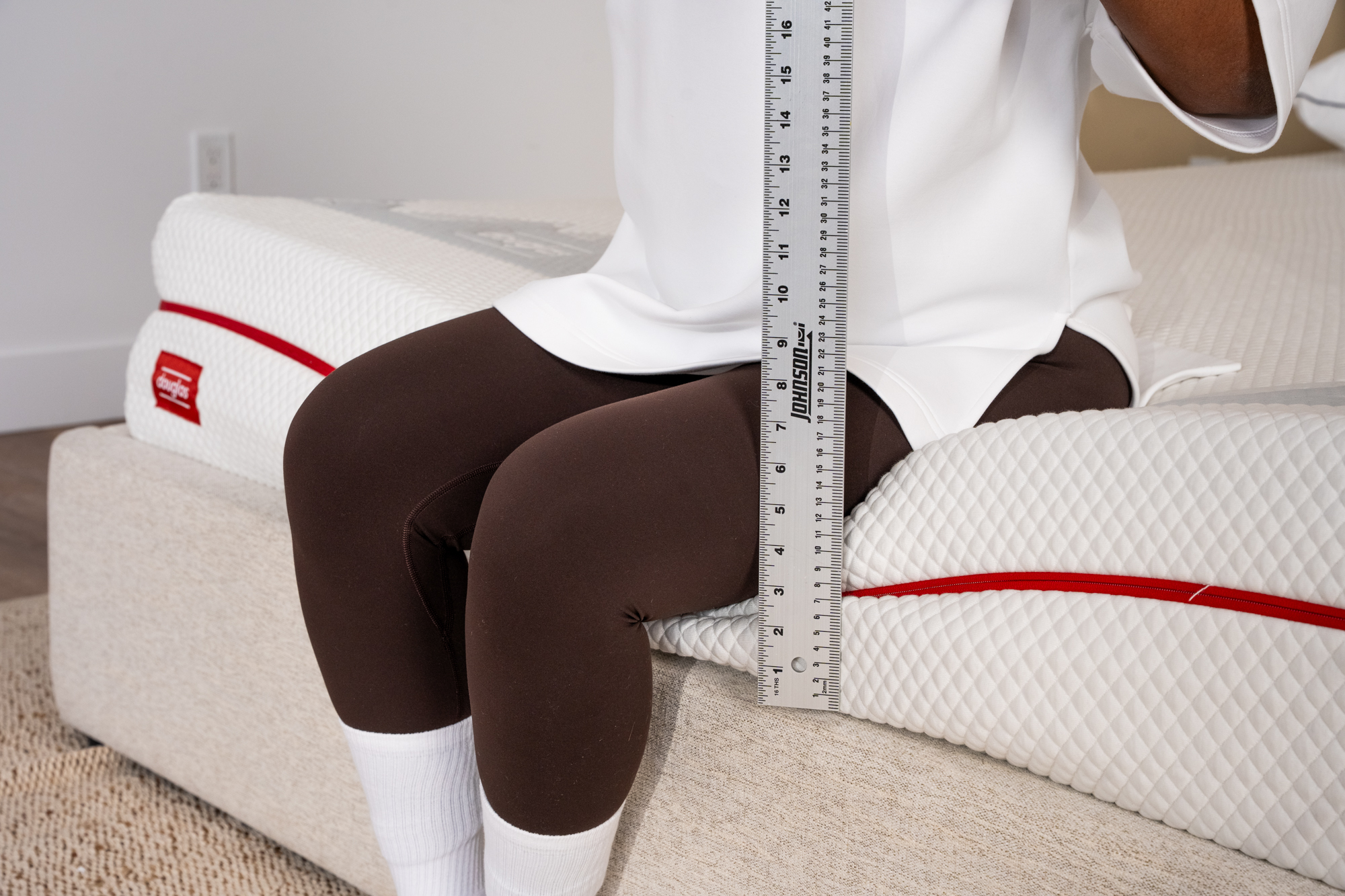
The Douglas Original’s edge support wasn’t as strong as I hoped. There was approximately 6–7″ of sinkage at the perimeter, taking me all the way down to the foundational support foam, and causing an unbalanced feel. For a foam mattress at this price point, this level of edge support performance is disappointing — especially when other brands like Endy and Silk & Snow deliver meaningfully stronger edge support at comparable prices.
The weak edge support also limits the usable sleep surface of the mattress, as sleeping or sitting near the perimeter of the bed risks an uncomfortable, unstable experience. This is a recurring theme in customer reviews of the Douglas Original, and our testing confirmed it is a genuine and consistent limitation — not an isolated incident.
Sinkage and Responsiveness
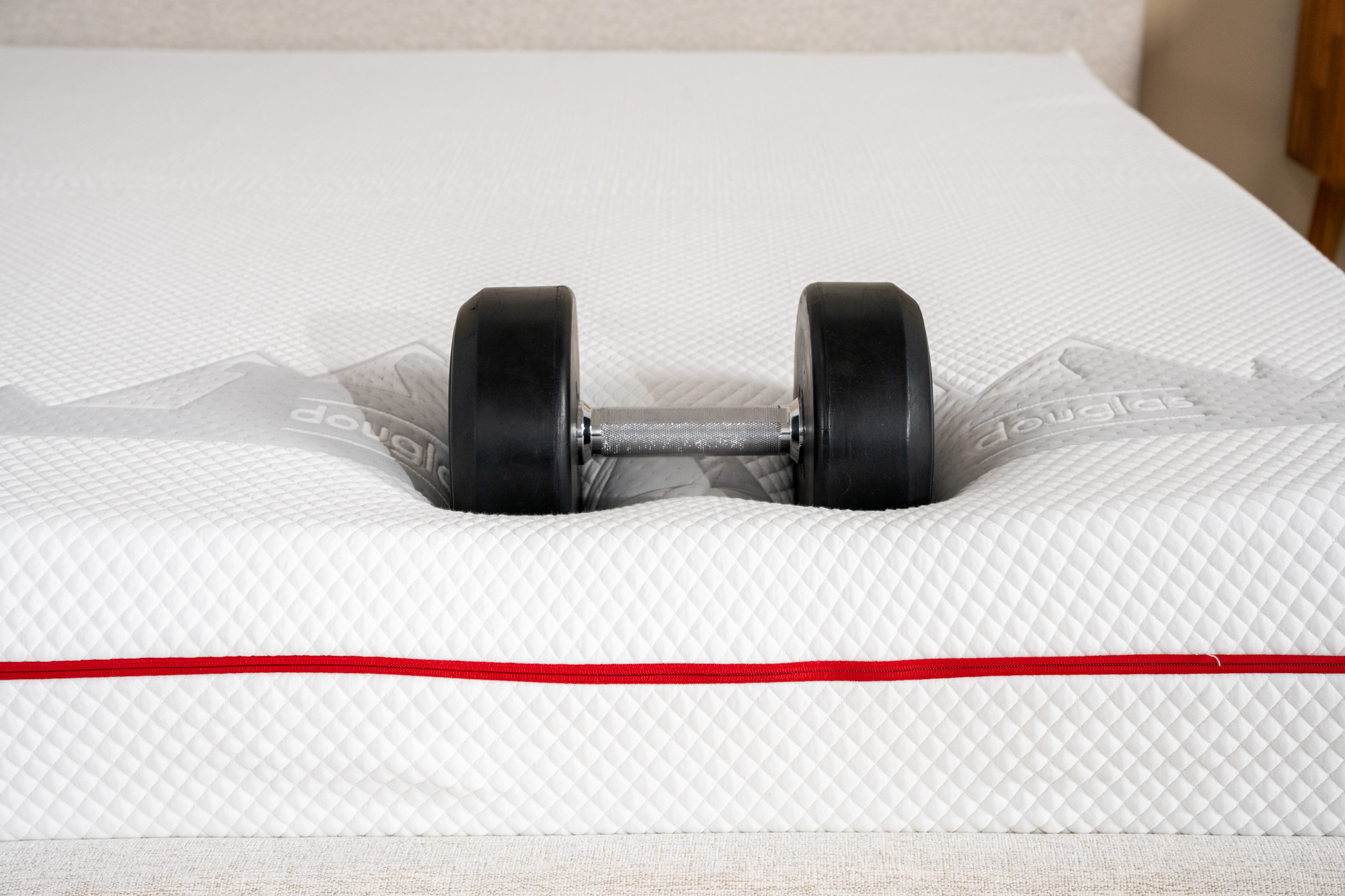
As mentioned, the enveloping feel of memory foam is not to everyone’s liking — and the Douglas Original exemplifies this. When testing, I found I sank into the foam and wasn’t able to move as easily across the mattress surface as I could with The Endy or The Casper. The Douglas Original also lacks perfect bounce, limiting its responsiveness significantly.
When we dropped a 5lb ball onto the mattress, it only bounced once — a few centimetres above the surface — before settling. This is a useful indicator of how the mattress will respond to nighttime movement: most sleepers, especially combination sleepers, will find repositioning on the Douglas more effortful than on competing foam mattress options. The Douglas Summit does improve somewhat on this front, but the Douglas Original in its current form is a meaningful step behind the right mattress standard set by Endy, Casper, and Silk & Snow.
How does it suit different sleeping positions?
Side Sleepers
The Douglas Original can be soft enough for most side sleepers who prefer a cushiony feel and don’t mind some sinkage. That said, those who dislike the “sinking in” feeling — or who need reliable edge support to use the full bed surface — may still find it uncomfortable. The limited motion isolation also makes it a suboptimal choice for side sleepers who share their bed.
Back Sleepers
Heavier back sleepers may prefer a firm mattress to the medium firm Douglas, as our back sleeping testers reported their lumbar region sank deeper than expected — undermining proper spinal alignment. For lightweight back sleepers, the Douglas Original can be comfortable enough, though the Endy remains a stronger choice for balanced support and consistent sleep quality.
Stomach Sleepers
Our stomach sleeper testers flagged sinkage in the hip region as a key concern — more than any other sleeping position tested. The soft-leaning foam of the Douglas Original does not provide the firm hip support that stomach sleepers need for proper spinal alignment. It may be suitable for very lightweight stomach sleepers, but for everyone else, a firm mattress from Endy or Silk & Snow is the safer choice.
Combination Sleepers
Combination sleepers may find the Douglas Original difficult to sleep on due to its enveloping feel and lack of perfect bounce. Lightweight combination sleepers may find movement manageable, but heavier bodies may feel stuck when trying to shift sleeping positions throughout the night — a direct result of the foam layers’ slow recovery.
Lightweight Sleepers
For lightweight sleepers, the Douglas Original can provide adequate support and comfort. The cooling gel foam comfort layer offers enough balanced pressure relief for lighter body weight profiles, and the sinkage will be less pronounced. That said, even lightweight sleepers will likely notice the edge support limitations and modest motion isolation.
Heavy People
Heavier testers sank notably deeper into this mattress than their lighter counterparts, exacerbating both the heat retention and edge support issues. We suggest considering alternatives like the Endy Original Firm for better long-term support, balanced pressure relief, and proper spinal alignment — especially for heavier sleeping positions like stomach and back.
Should You Buy the Douglas Original?
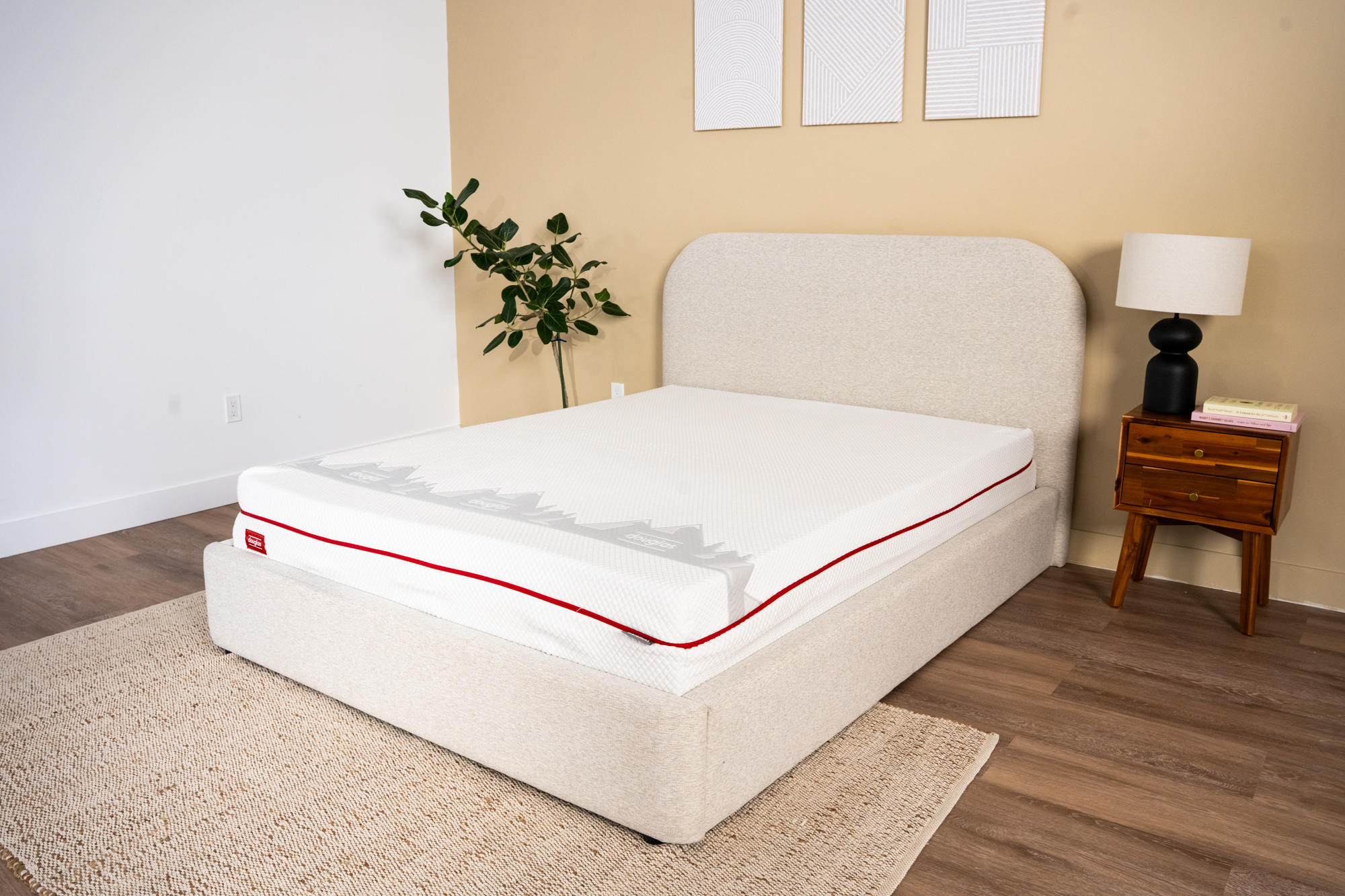
Final thoughts: the overall performance of the Douglas Original did not impress us relative to similarly priced all foam mattress options. This foam mattress did not showcase outstanding scores across cooling, responsiveness, or motion isolation — whereas these were clear strengths for other brands like The Endy, The Casper, and Silk & Snow S&S.
To Douglas’s credit, their commitment to sustainable materials — including sourcing from renewable wood sources and donating returned mattresses to local charities — reflects genuine environmental values. However, reducing your carbon footprint and finding your right mattress are two different goals, and on the latter, the Douglas Original falls short of expectations for the price.
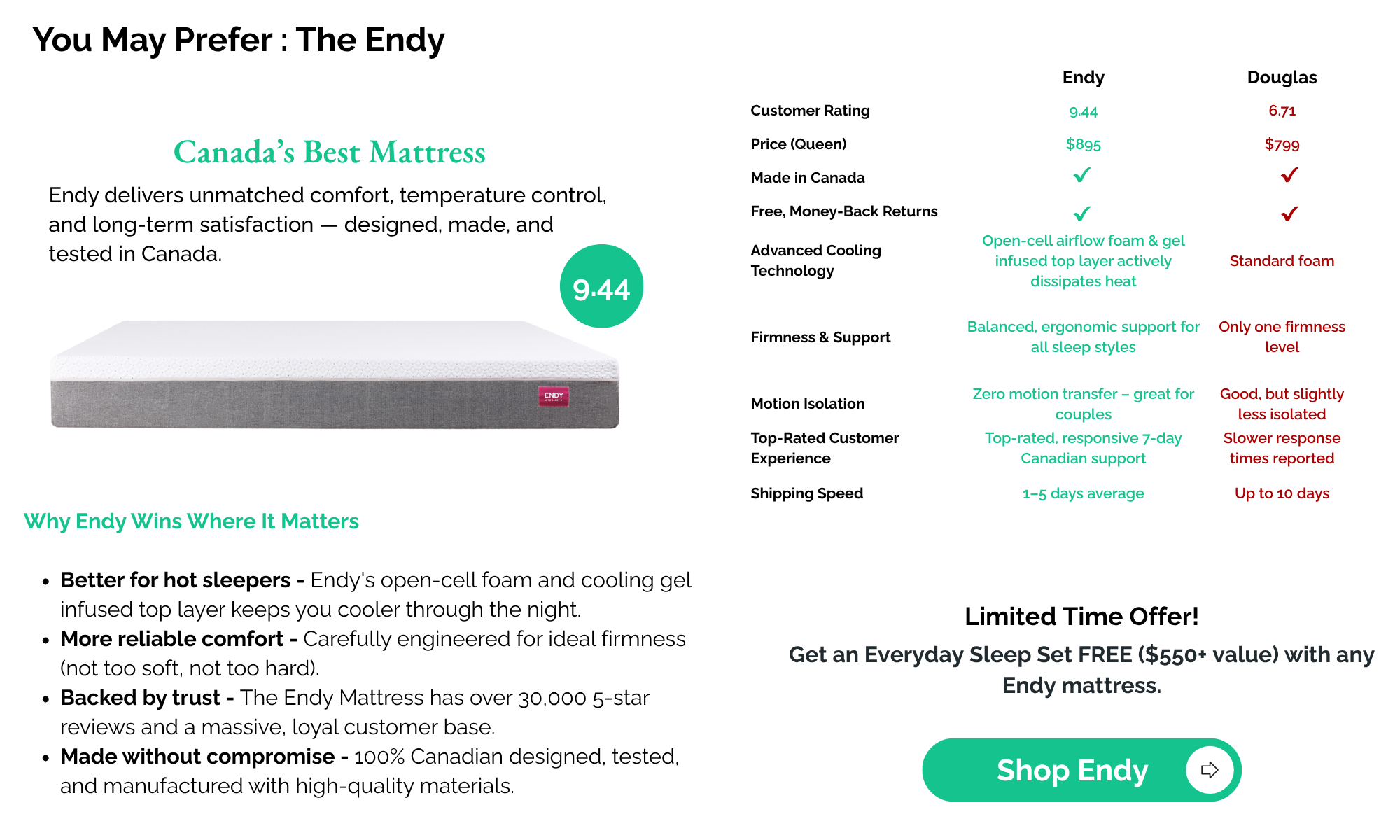
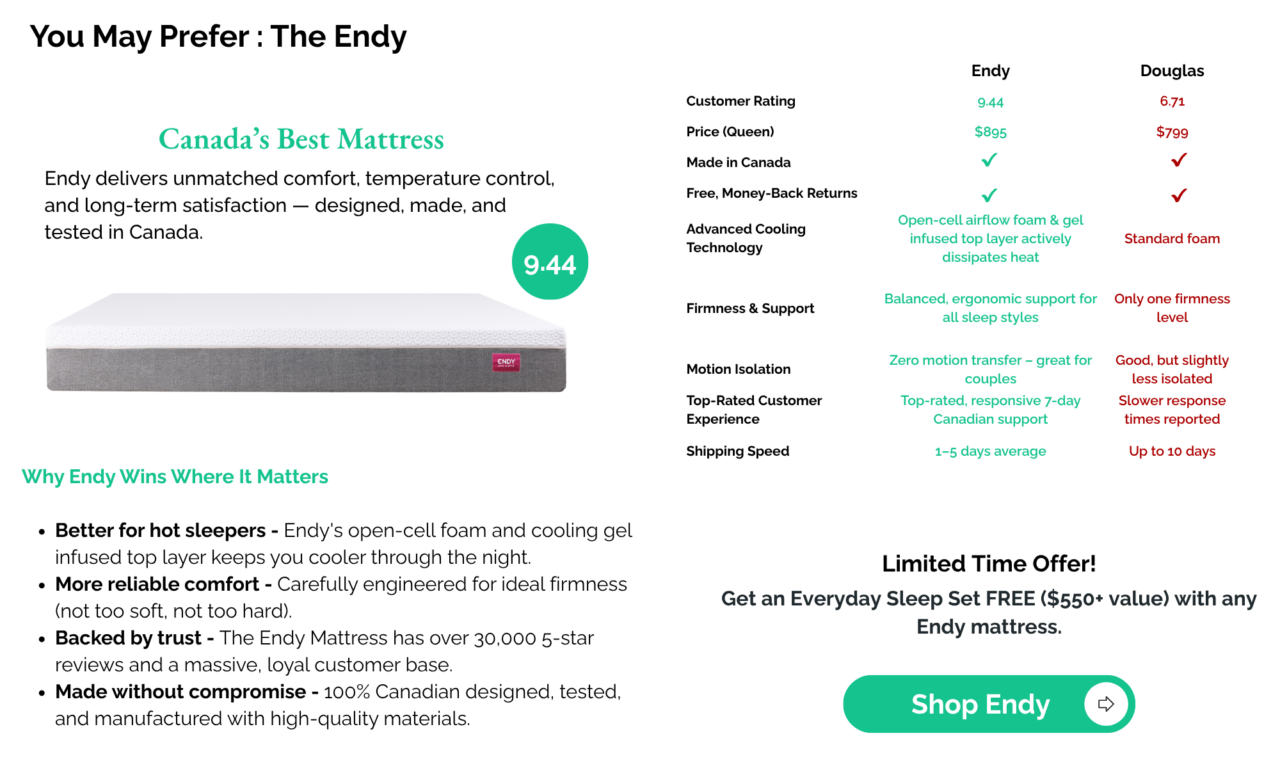
The 20-year warranty and 365 night sleep trial are genuine positives. And free pickup of returned mattresses makes the trial genuinely risk-free. But a long sleep trial is most valuable when a mattress gives you reason to keep it. Comparing Endy vs Douglas, we found meaningful differences in performance, with The Endy exceeding expectations in comfort, motion isolation, edge support, and breathability — making it the right mattress for a wider range of sleepers. We’d recommend The Endy as a better sleep investment that suits a broad range of sleeping positions and is available in multiple firmness levels — including a firm version for those who need it.
Please note: All prices referenced in this article reflect MSRPs and are accurate to the best of our knowledge as of April 1, 2026.
Frequently Asked Questions
How Douglas Original Compares to Similar Mattresses
|
Douglas Original |
The Endy Original |
The Casper |
Silk & Snow S&S |
|
| Rating |
7.94/10 |
9.59/10 |
8.74/10 |
9.01/10 |
| Firmness |
Medium-firm |
Medium-firm |
Medium-firm |
Medium-firm |
| Material |
Memory Foam |
Memory Foam |
Memory Foam |
Memory Foam |
| Cooling |
|
|
|
|
| Best For |
Side Sleepers, Lightweight Sleepers, Short term use |
Suits a wide range of sleepers |
Suits a wide range of sleepers |
Suits a wide range of sleepers |






About Our Author