Puffy Cloud Mattress Review: Soft Like A Cloud, But Sinks Deep



Product Research: Our Process

Puffy Cloud Mattress: Soft Like A Cloud, But Sinks Deep.
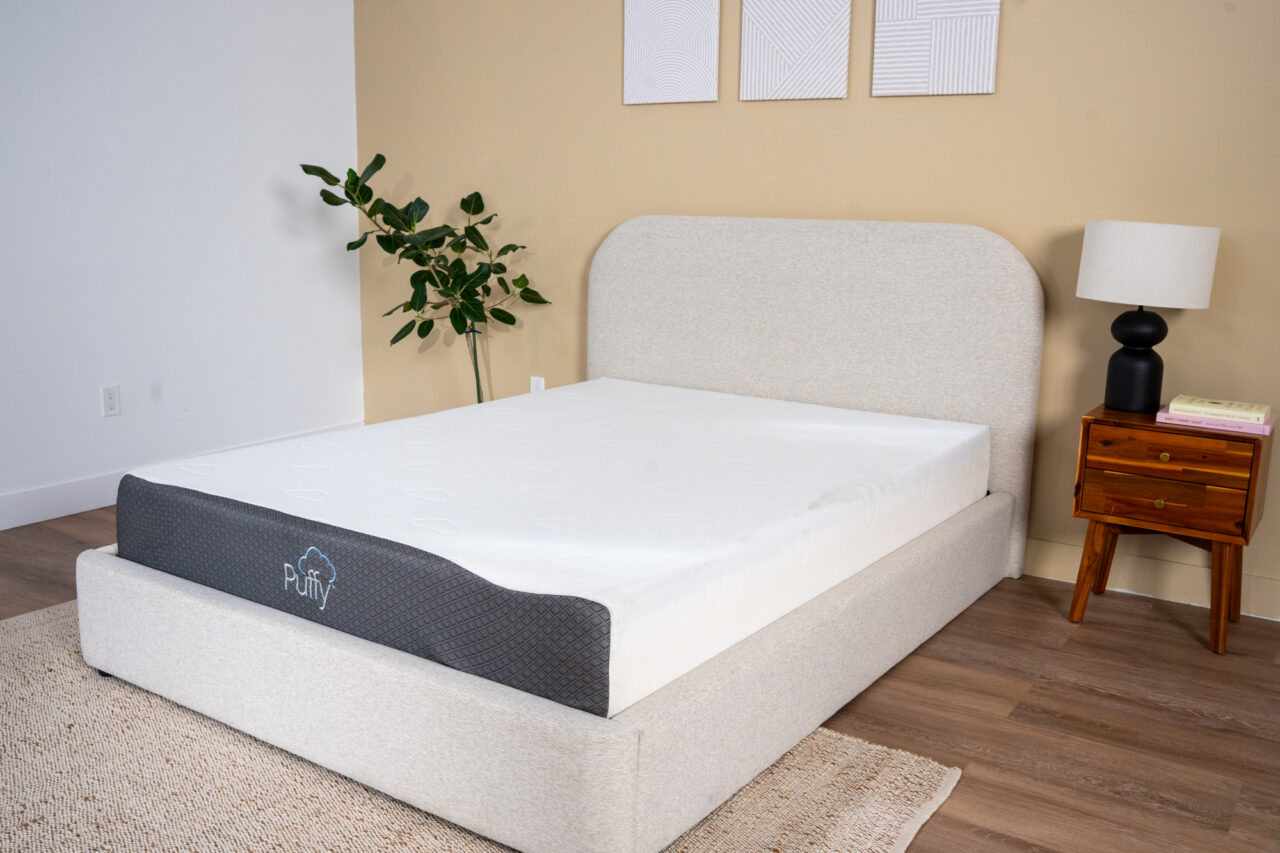
Our Verdict
The puffy cloud mattress cooling performance is underwhelming, while the deep sinkage makes it almost impossible to keep spinal alignment during the night — a fundamental flaw for an all foam mattress at this price tier. In our tests, we observed a strong off gassing smell that lasted 51 days — a concerning length of time, especially considering you only receive a 101-night sleep trial. Our certified sleep science coaches who reviewed the puffy cloud mattress results were equally unimpressed with the support and durability findings.
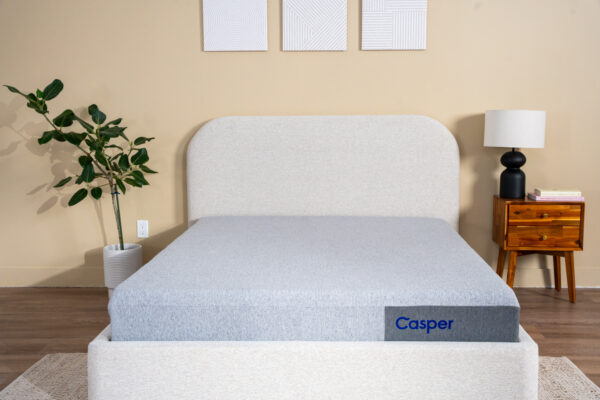
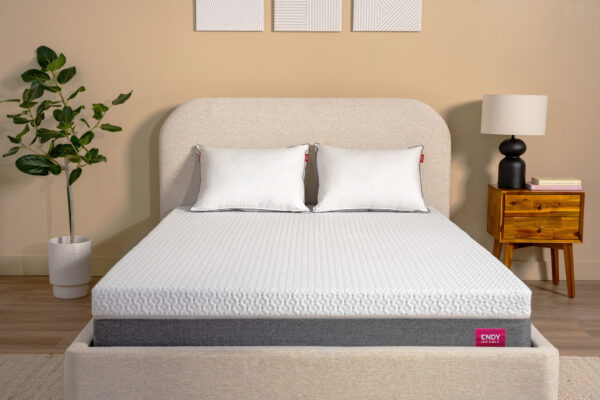
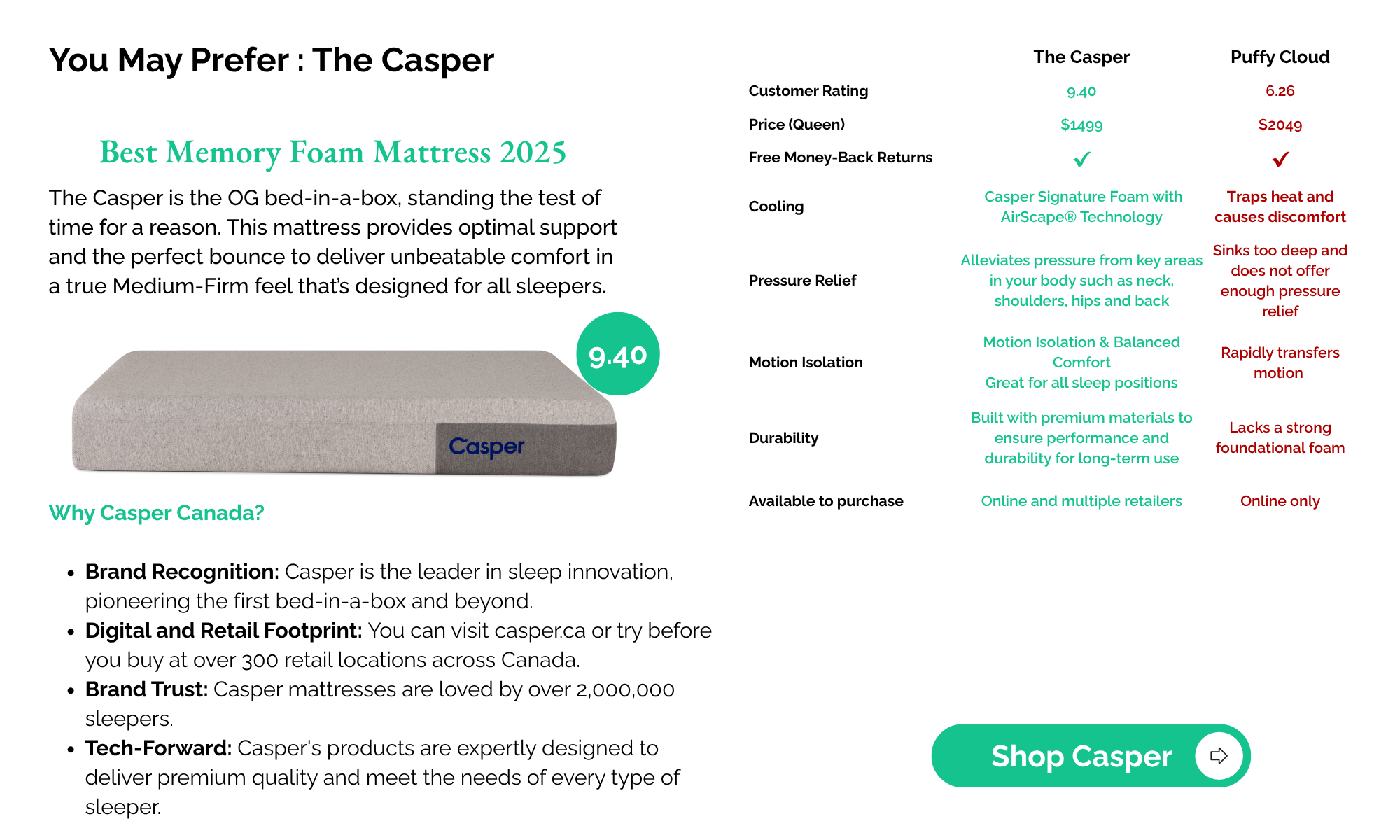
My suggestion is to invest in a better alternative for average weight sleepers and above. The Casper or The Endy Plush both cost considerably less but offer far better cooling, comfort, and support across a wider range of sleeping position preferences. If you're set on a puffy mattress, the Puffy Lux Hybrid or Puffy Royal Hybrid are stronger — if significantly more expensive — upgrades.
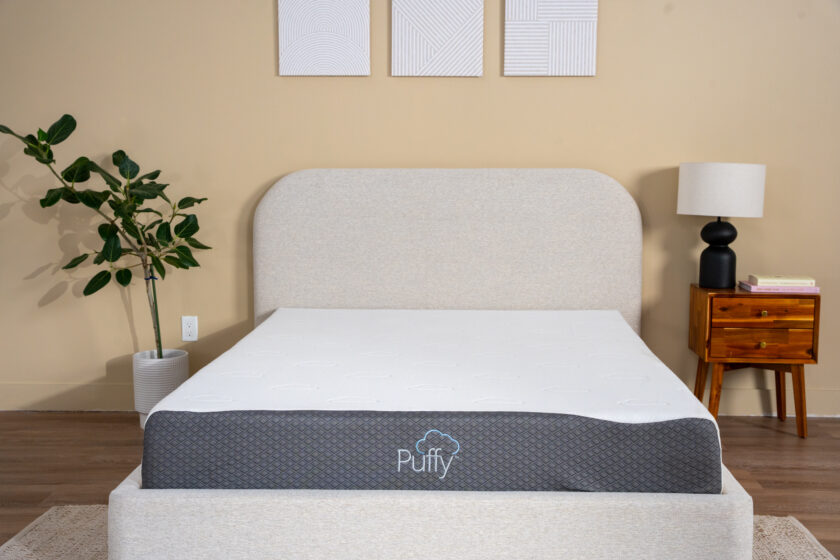
Puffy Cloud Mattress: Soft Like A Cloud, But Sinks Deep.


Table of Contents
Mattress Sizes & Prices
| Size | Price | Dimensions |
|---|---|---|
| Twin | $1649 | 39″ x 75″ x 10” |
| Twin XL | $1679 | 39″ x 80″ x 10” |
| Full / Double | $1849 | 54″ x 75″ x 10” |
| Queen | $2049 | 60″ x 80″ x 10” |
| King | $2349 | 76″ x 80″ x 10″ |
| California King | $2349 | 72″ x 84″ x 10” |
| Split King | $2608 | 76″ x 80″ x 10 |
Purchasing and Returns
Unboxing and First Impressions
The Puffy Cloud Mattress arrived at my doorstep in a compact box. The puffy mattress did not feel too heavy, which was surprising given how luxurious it looks on the Puffy website. My biggest regret was unwrapping it in my bedroom, as the off gassing was stronger than anything I’ve experienced with other foam mattresses — immediately filling my living space with an unpleasant odour.
Not only did this compromise air quality, but it gave me and my husband strong headaches and occasional coughing. For young sleepers or anyone with respiratory sensitivities, this level of off gassing is a serious concern. The first impression of this puffy cloud mattress was far from the premium experience its price tag promises. By comparison, off gassing on The Endy and Casper dissipates within hours — not weeks.
Construction
The Puffy Cloud puffy cloud features a five-layer all foam design built entirely from memory foam variants. While the puffy cloud mattress features sound impressive on the Puffy website, our testing reveals a construction that struggles to deliver consistent support layer performance, temperature regulation, or meaningful motion isolation at this price point. Here’s what’s inside:
1. Airgocell® Foam (Top Layer / Comfort Layer)
The top layer is Puffy’s proprietary Airgocell® foam layer — an open-cell comfort layer designed to absorb moisture and prevent overheating. While this top layer does contribute to surface breathability, it does not incorporate cooling gel or gel infused memory foam technology, which limits its temperature regulation capabilities compared to the gel memory foam top layers found in higher-performing memory foam mattresses. This is a meaningful gap for anyone who tends to sleep hot.
2. HALO® Memory Foam (Memory Foam Layer / Comfort Layer)
The memory foam layer beneath uses Puffy’s HALO® memory foam for motion isolation and pressure relief at pressure buildup zones. This comfort layer delivers the classic memory foam feel — contouring and enveloping — but without thicker comfort layers or gel infused memory foam infusion, it contributes to the excessive sinkage and heat retention we observed. Average weight back sleepers and stomach sleepers will find this memory foam layer offers insufficient resistance for spine neutrally aligned sleeping. The memory foam feel here is more characteristic of a slightly softer mattress than a medium firm mattress, despite Puffy’s claims.
3. High Resiliency Xtra Foam (Support Layer)
The support layer — and support foam base — is intended to offer foundational support for the puffy cloud. However, the dense foam base does not provide adequate resistance for average weight sleepers or above, contributing to the deep sinkage we documented throughout testing. The support foam here is thinner and less responsive than comparable support layer construction in the Puffy Lux or Puffy Royal Hybrid — and significantly less capable than the high-density support foam in Canadian-made memory foam mattresses like The Endy or The Casper.
Comfort
Puffy Cloud sounds like heaven, but the comfort of this cloud mattress left me underwhelmed for anything beyond lightweight use. The all foam mattress design creates a deeply contouring memory foam feel that is difficult to maintain spine neutrally aligned on — particularly for average weight and heavier sleepers. The over-contouring nature of the comfort layer stack means body weight concentrates at the lumbar region and hips rather than being distributed evenly, causing me to wake up with back pain most mornings.
The puffy cloud mattress does offer some enhanced pressure relief at both the shoulders and hips for lightweight sleepers — but for average weight sleepers and above, the lack of enough support through the support foam base undermines whatever enhanced pressure relief the comfort layer provides. This is the core contradiction at the heart of the Puffy Cloud: a softer mattress that markets itself as delivering exceptional pressure relief, but can’t sustain it for the majority of adult sleepers.
Firmness
Puffy Cloud scored 3 out of 10 on our firmness scale — firmly in softer mattress territory, and a far cry from the medium firm feel advertised. This is one of the lowest firmness scale results we’ve recorded for any memory foam mattress in this price range. The all foam design leans so far toward a slightly softer mattress feel that it’s essentially incompatible with back and stomach sleepers, and even challenging for average weight sleepers who simply prefer a balanced, medium firm surface.
For stomach sleeping or back sleeping, a genuinely medium firm mattress — or ideally a firmer mattress — is essential for preventing hip and lumbar region sinkage. The puffy cloud mattress firmness level makes it suitable only for lightweight sleepers who actively prefer a classic memory foam feel with deep contouring. Even then, most sleepers will find better exceptional pressure relief and spine neutrally aligned support from a true medium firm mattress at a lower price point.
Motion Transfer
The Puffy Cloud did not offer enough motion isolation for undisturbed sleep — a notable shortcoming for an all foam mattress, which should theoretically excel in this area. As a light sleeper who can feel almost any movement, I woke up several times when my partner tossed and turned. The motion transfer across the puffy cloud mattress surface was frustrating and contributed directly to poor sleep quality.
As shown in our experiment, dropping an item onto the surface of the Puffy Cloud results in a high level of vibration — a result that underscores how poorly the foam layer stack contains movement. For comparison, certified sleep science coaches consistently rate Canadian alternatives like The Endy (10/10 motion isolation) and The Casper as far superior for couples seeking motion isolation from their memory foam mattresses. If you share your bed with someone, the puffy cloud’s motion transfer performance is a serious drawback.
Cooling
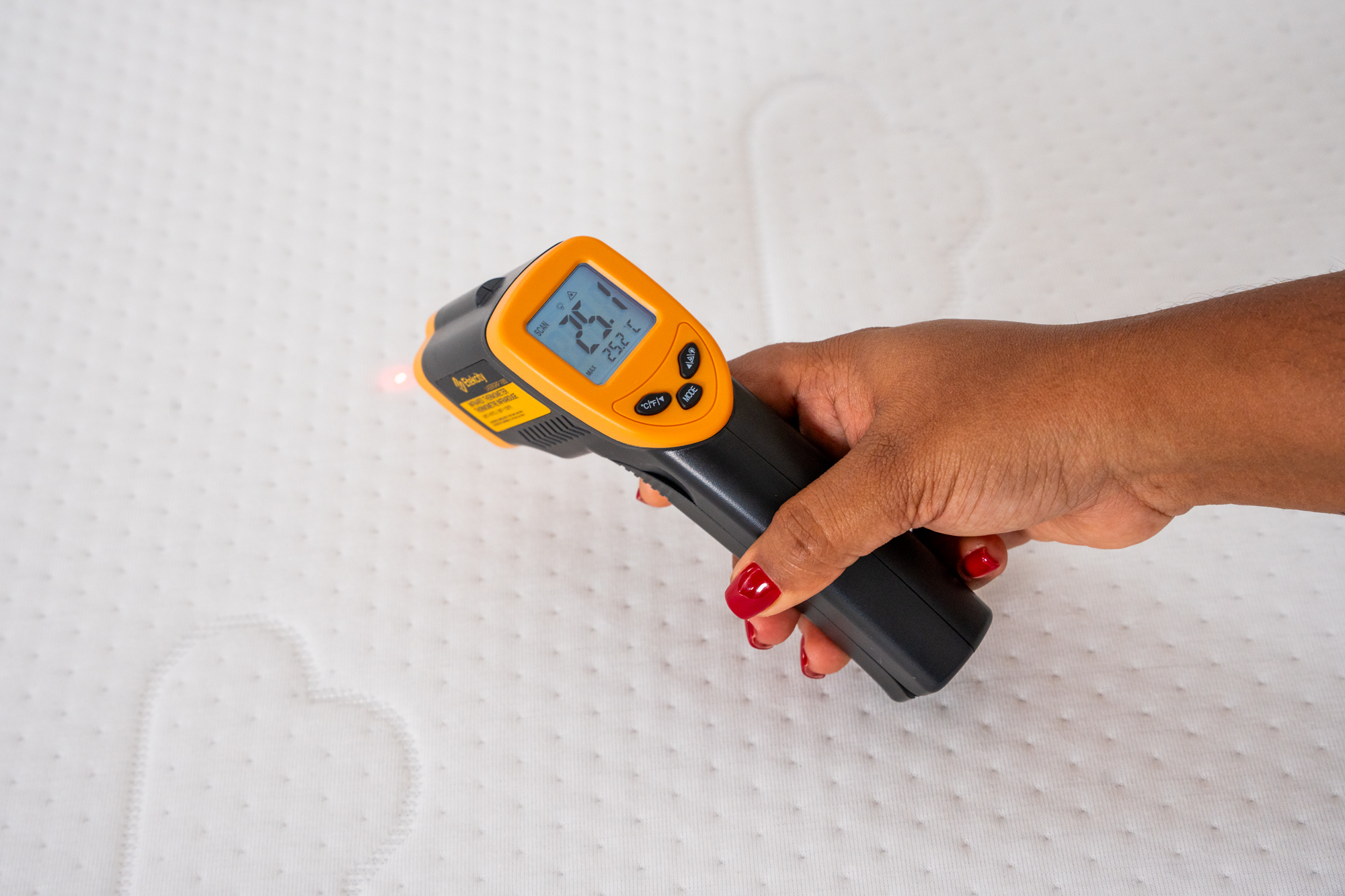
The Puffy Cloud did a fairly adequate job at cooling relative to its own foam mattresses category, but “adequate” is not a standard befitting a $2,049 cloud mattress. The top layer Airgocell® comfort layer was cool to the touch and stayed breathable at night, and the memory foam did not sleep hot as aggressively as some other foam mattresses like Juno and Emma. My husband, who tends to sleep hot, was able to rest through the night in most conditions.
However, the cooling features of this mattress are limited to passive surface breathability — there is no cooling gel, gel infused memory foam, or gel memory foam layer incorporated into the Puffy Cloud construction. Without active temperature regulation through cooling gel technology, the heat retention of the memory foam layer stack becomes more noticeable over time, particularly in warmer months or in rooms without air conditioning. The puffy cloud’s surface temperature took a long time to fully dissipate after body heat tests — longer than comparable memory foam mattresses from The Endy or The Casper. For serious hot sleepers, this cloud mattress is unlikely to satisfy.
Edge Support
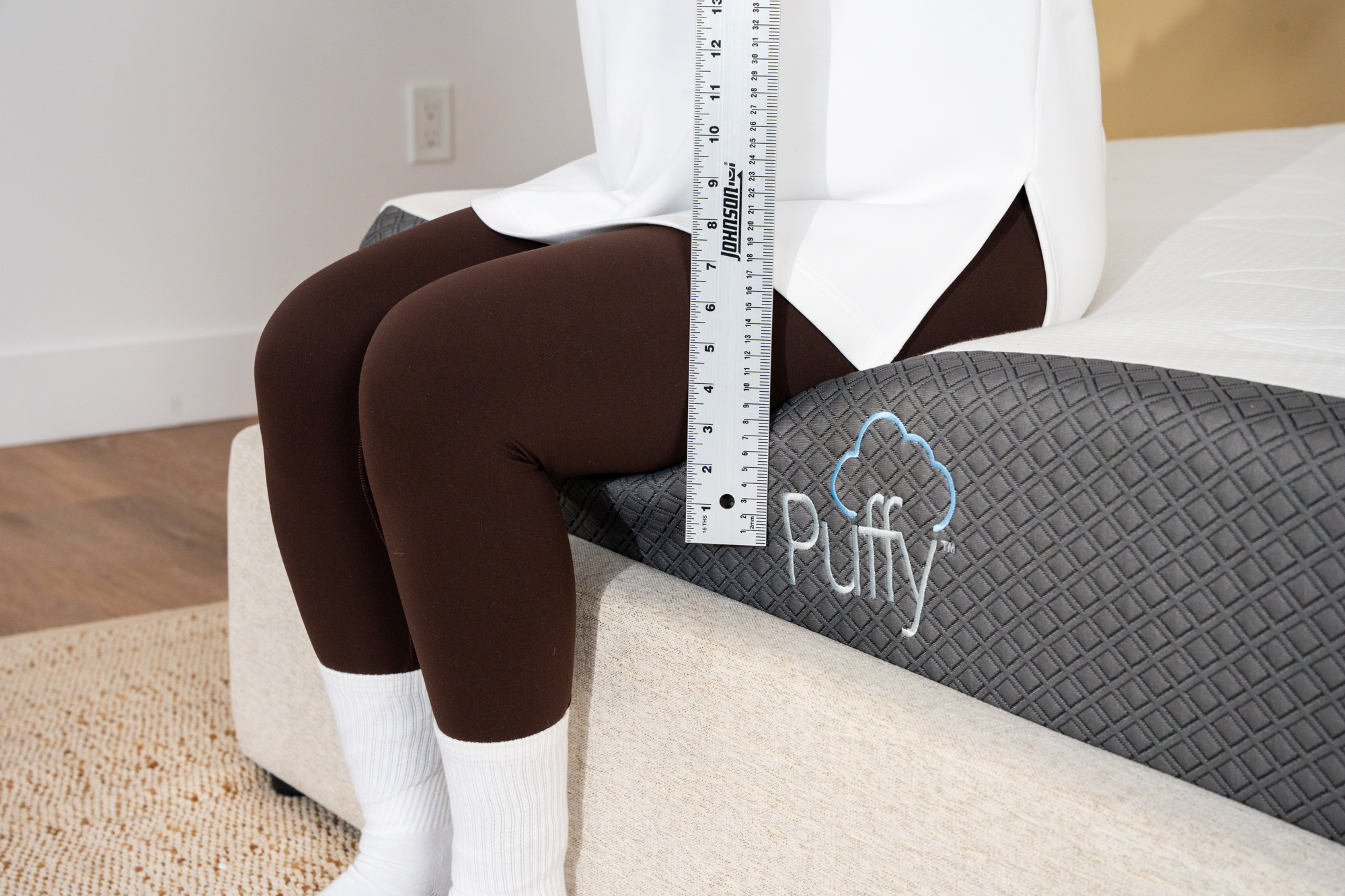
The Puffy Cloud did not disappoint initially in edge support, but my biggest concern was how quickly the perimeter support deteriorated with use. Initially, the cloud mattress held well while sitting or lying on the edge — but a month later, I felt myself slipping off. After a month of regular use, I tested the edge support again and experienced sinkage close to 5 inches at the perimeter.
This rapid deterioration of edge support is a strong indicator that the puffy cloud mattress is not as durable as alternatives like The Casper and The Endy — both of which maintained consistent edge support throughout our long-term testing. For average weight sleepers who use the full surface of their cloud mattress, this diminishing edge support progressively shrinks the usable sleeping area and undermines confidence near the perimeter of the bed. For heavier body weight profiles, the edge support degradation is likely to be even more pronounced and rapid.
Sinkage and Responsiveness
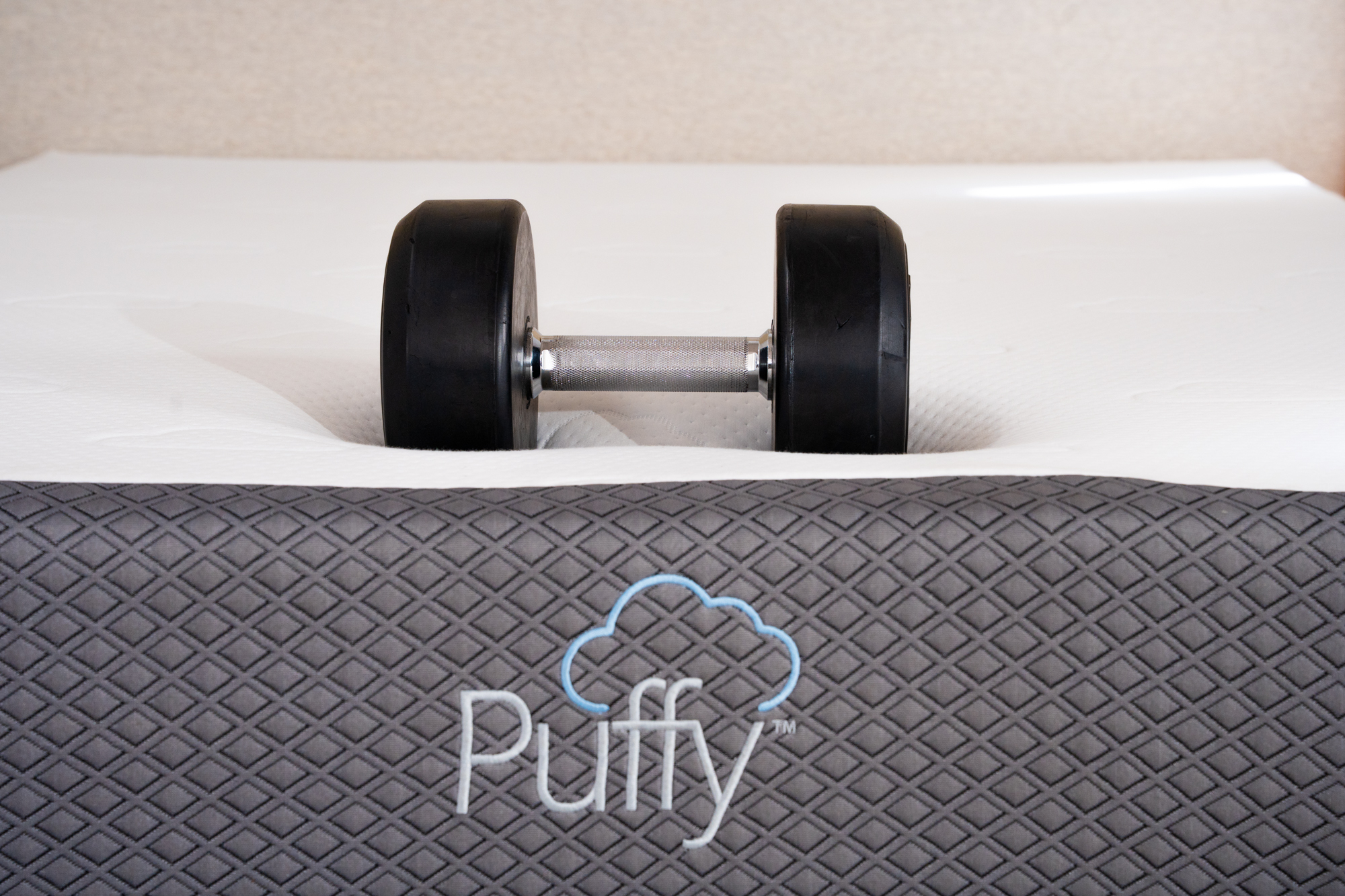
The sinkage on the Puffy Cloud Mattress is possibly the single biggest reason to look elsewhere. Unless you’re a lightweight sleeper or a side sleeper who actively prefers extremely softer mattress options, the deep sinking will cause discomfort and negatively affect spinal alignment for virtually anyone of average weight or above. I noticed 6–7 inches of deep sinking while lying on the puffy cloud, and it kept worsening — to the point where there were permanent imprints that never fully recovered.
This level of permanent deformation in a memory foam mattress this expensive is deeply concerning for overall longevity. The puffy cloud’s responsiveness is equally underwhelming, with the foam layer stack taking a prolonged time to recover from movements — a direct consequence of the dense foam comfort layer design. This combination of deep sinkage and slow recovery makes the Puffy Cloud a particularly poor choice for combination sleepers and stomach sleeping — both of which require responsive, supportive memory foam.
How does it suit different sleeping positions?
Side Sleepers
Some side sleepers who prefer softer mattress options will appreciate the classic memory foam feel of the Puffy Cloud — and for lightweight sleepers on their side, the comfort layer does provide some cradling relief at both the shoulders and hips. However, average weight side sleepers will find the puffy cloud sinks too deeply to keep the spine neutrally aligned, and pressure buildup at the hips becomes a real concern over time. Most sleepers in this category will find better enhanced pressure relief and spinal alignment from a true medium firm mattress like The Endy or Casper.
Back Sleepers
Back sleepers puffy cloud performance is simply inadequate for most sleepers of average weight and above. The puffy cloud does not offer enough support to keep the spine neutrally aligned and back properly supported — the lumbar region sinks too deeply into the support foam base, undermining spinal alignment from the first night. Back sleepers should look to a medium firm mattress or a hybrid mattress option like the Puffy Lux Hybrid — or better yet, The Endy or Casper, which deliver genuine spinal alignment at a lower price.
Stomach Sleepers
Stomach sleepers need a firmer mattress that keeps their midsection aligned and prevents pressure buildup at the hips. The Puffy Cloud is categorically unsuitable for stomach sleeping — its 3/10 firmness scale score means back and stomach sleepers have no realistic path to spine neutrally aligned support on this memory foam mattress. The Casper and The Endy are both far better alternatives for stomach sleepers, offering a medium firm feel at a fraction of the puffy mattress cost.
Combination Sleepers
Combination sleepers will encounter two compounding problems with the Puffy Cloud: extreme motion transfer and slow foam recovery. Together, these make switching sleeping position throughout the night genuinely disruptive. The memory foam feel here is too enveloping for the responsive transitions that combination sleepers need, and the motion isolation score of 5/10 means a restless partner will be felt clearly across the cloud mattress surface.
Lightweight Sleepers
Lightweight sleepers and young sleepers are the one group for whom the Puffy Cloud can work adequately. At lighter body weight profiles, the deep sinkage is less pronounced, and the comfort layer delivers a genuinely plush, classic memory foam feel that some will love. However, even lightweight sleepers should weigh the puffy mattress cost against what they’d receive from a comparably priced alternative — the value gap remains significant.
Heavy People
Heavier individuals should steer clear of the Puffy Cloud entirely. The support foam base and thin memory foam layer stack are simply not engineered for higher body weight, and the rapid deterioration of both edge support and overall mattress structure makes long-term use untenable. We recommend looking into options such as The Endy Firm — a firmer mattress option offering durability and spinal alignment that the puffy cloud mattress cannot match.
Should You Buy the Puffy Cloud Mattress?
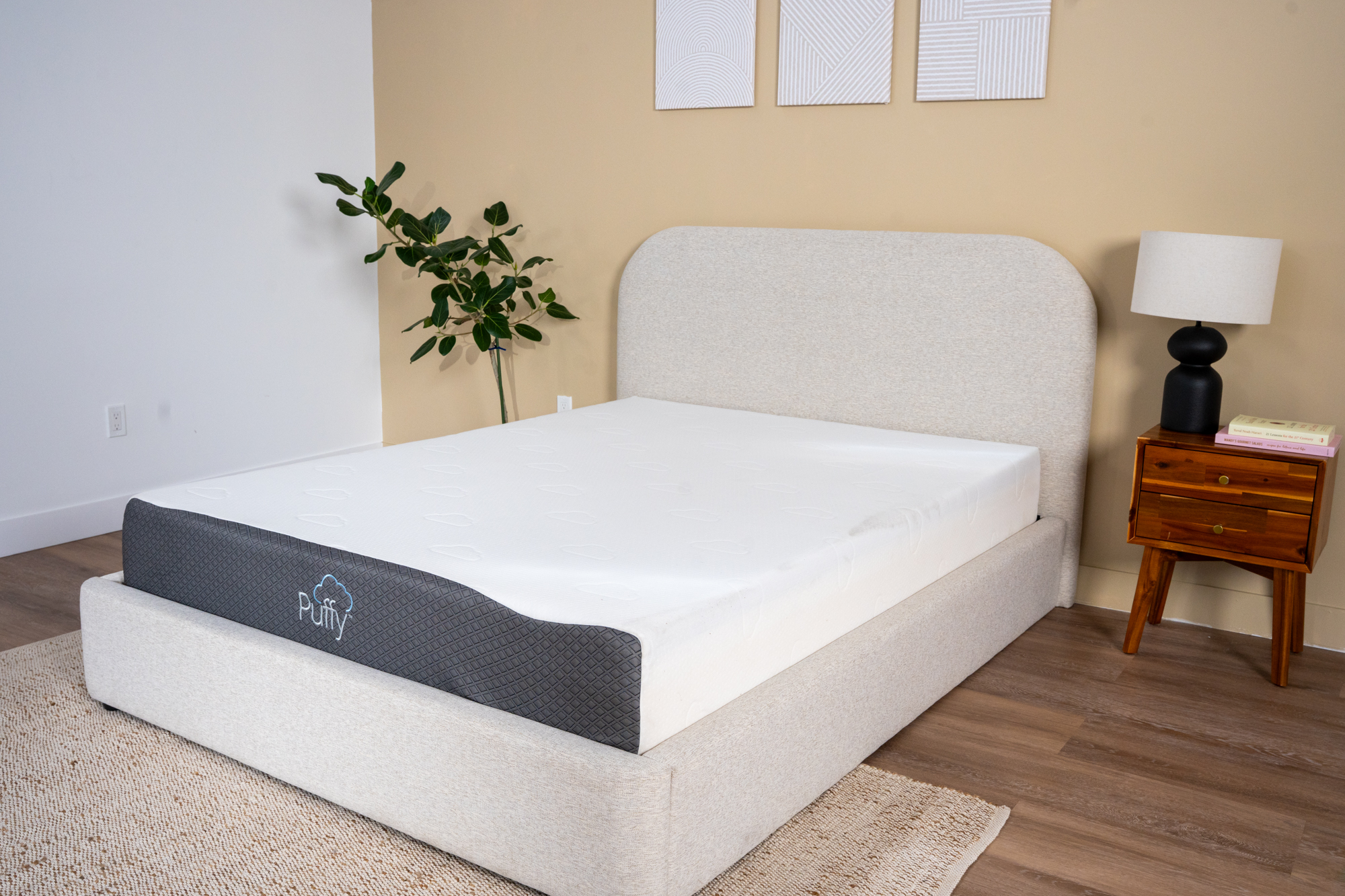
The Puffy Cloud performed decently in cooling and initial edge support, but considering the lack of firmness, deep sinkage, diminishing edge support, poor motion isolation, and absence of gel infused memory foam technology, there are many memory foam mattresses on the market for a fraction of the puffy mattress cost that outperform it comprehensively.
The puffy cloud mattress features — including the Airgocell® comfort layer and HALO® memory foam layer — sound impressive in marketing materials on the Puffy website, but our testing tells a different story. After about one month’s use, significant sagging was evident across multiple areas of the cloud mattress. The off gassing took almost two months to dissipate, which poses a genuine risk for young sleepers and those with respiratory sensitivities.
Although the Puffy Cloud advertises a lifetime warranty, the two-replacement maximum makes this warranty far less meaningful in practice. For the sleep accessories budget you’d spend on a Puffy Cloud, you can invest in a medium firm mattress like The Casper or The Endy Plush — both of which will last significantly longer, offer far better motion isolation, spinal alignment, and durability, and come with 365-night night sleep trial periods for true peace of mind.
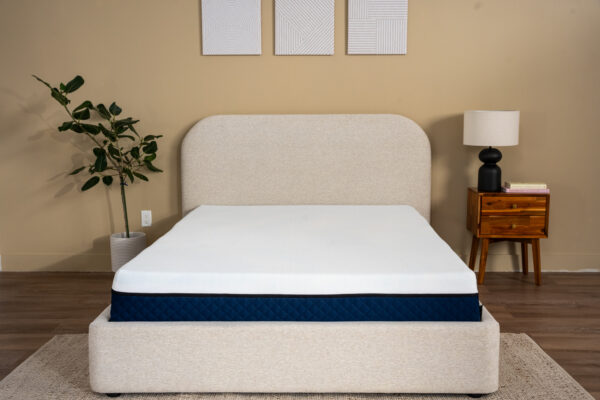
If you are committed to the Puffy ecosystem, consider the Puffy Lux or Puffy Lux Hybrid as more capable — if still expensive — alternatives. The Puffy Lux adds thicker comfort layers and improved support layer construction, and the Puffy Royal Hybrid incorporates a hybrid mattress coil system for better responsiveness. But for most sleepers of average weight and above, the Canadian alternatives remain the stronger, better-value choice.
Please note: All prices referenced in this article reflect MSRPs and are accurate to the best of our knowledge as of April 1, 2026.
Frequently Asked Questions
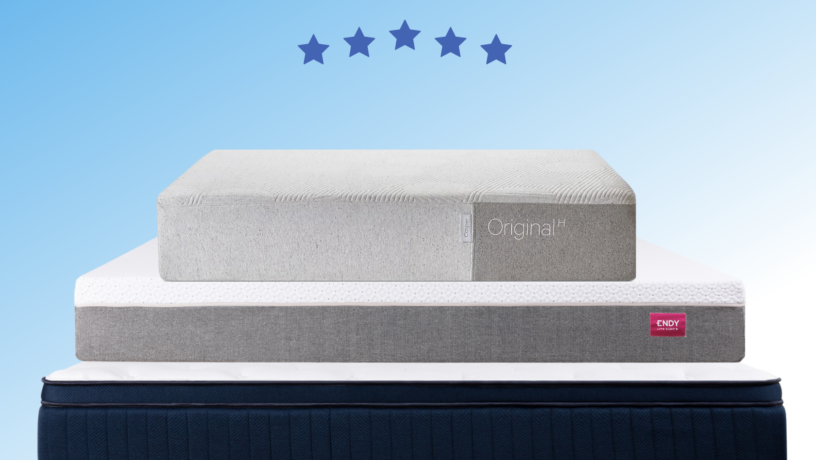
How Puffy Compares to Similar Mattresses
|
Puffy Cloud |
The Casper |
Silk & Snow S&S |
The Endy |
|
| Rating |
6.26/10 |
9.40/10 |
9.26/10 |
9.44/10 |
| Firmness |
Soft: 3/10 |
Medium-firm: 6.5/10 |
Medium-firm: 6.5/10 |
Medium-firm: 6.5/10 |
| Material |
Memory Foam |
Memory Foam |
Memory Foam |
Memory Foam |
| Cooling |
|
|
|
|
| Best For |
Lightweight sleepers, Short term use |
Suits a wide range of sleepers |
Suits a wide range of sleepers |
Suits a wide range of sleepers |






About Our Author