


Memory Foam vs Hybrid Mattresses: Which Should You Choose?

The hybrid vs memory foam mattress debate comes down to one question: what does your body need most from a sleep surface? Both mattress types deliver genuine comfort — but they prioritise different things. Memory foam mattresses excel at deep contouring and motion isolation. Hybrid mattresses offer better airflow, more bounce, and stronger edge support. Neither is universally better. The right answer depends entirely on how you sleep, who you share a bed with, and what trade-offs you’re willing to make.
This guide breaks down every meaningful difference between foam and hybrid mattresses — from construction and cooling to pressure relief and price — so you can make a confident, informed decision.
Memory Foam vs Hybrid Mattresses: Which Should You Choose?
| Feature | Memory Foam Mattresses | Hybrid Mattresses |
| Feel | Slow, contouring, enveloping | Balanced, responsive, springy |
| Firmness Range | Soft to firm | Soft to extra-firm |
| Pressure Relief | Excellent | Very good |
| Motion Isolation | Excellent | Good (varies by coil type) |
| Edge Support | Moderate | Very good – Excellent |
| Cooling | Moderate | Good-excellent |
| Bounce | Low | Moderate-high |
| Durability | 10-15 years | 10-12 years |
| Queen Size Price | $400-$2000 | $800-$3500 |
| Best For | Side sleepers, light sleepers, couples | Hot sleepers, combination sleepers, heavier individuals |
What Is a Foam Mattress?
A foam mattress is a mattress built entirely from foam layers — no metal coils, no innerspring components, no other materials besides foam and a cover. All foam mattresses use varying densities and types of foam across their construction to deliver a complete support and comfort system.
Common foam types found in the comfort layers of foam mattresses include:
- Viscoelastic foam (memory foam): The defining material in most foam mattresses. Memory foam is temperature-sensitive, softening under body heat and conforming closely to the body’s shape. It provides deep contouring and superior pressure relief.
- Poly foam (polyurethane foam): A versatile base material used in both support cores and comfort layers. Poly foam is less contouring than memory foam but more responsive, making it a common transition layer between the memory foam comfort zone and the denser support base.
- Gel foam: Memory foam or poly foam infused with gel microbeads or gel swirl to help dissipate heat and reduce the heat retention that standard memory foam is known for.
- Latex foam: Either natural or synthetic, latex foam offers a more buoyant, responsive feel than memory foam while still providing good pressure relief. It sleeps cooler and is more durable than most synthetic foams.
- Copper infused foam: A newer addition to the mattress industry, copper infused foam claims antimicrobial properties and improved heat conductivity to help sleepers sleep cooler.
The support core in all foam mattresses is typically a high-density poly foam base — firm, stable, and designed to prevent premature sagging across the mattress’s lifespan.
Comfort Layers in Foam Mattresses
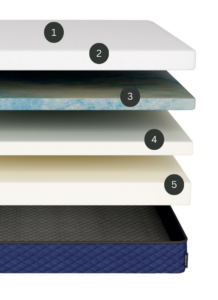
Silk & Snow S&S Mattress Construction
The comfort layers in foam mattresses are responsible for everything you feel when you lie down — the softness, the contouring, the pressure relief, and the surface temperature.
Memory foam contours to the body by responding to heat and weight simultaneously. As your body warms the foam, it softens and molds around your hips, shoulders, and lower back — redistributing pressure away from bony contact points and across a wider surface area. This is why memory foam mattresses are so consistently recommended for side sleepers: the hip and shoulder pressure that a firmer surface concentrates becomes dramatically reduced when memory foam layers absorb and redistribute that load.
Cooling additives in foam layers address the most commonly cited complaint about memory foam — that it traps heat. Modern foam mattresses use gel foam infusions, open-cell foam structures (modified foam architecture that increases airflow through the material), phase change material covers, and perforated foam designs to improve temperature regulation. These features genuinely help, though most foam mattresses still retain more heat than a comparable hybrid.
Foam thickness affects sinkage directly. A comfort layer of 3 cm produces a subtle contouring effect with minimal sinkage. At 5–8 cm, memory foam produces the characteristic deep contouring and sinking feeling associated with traditional memory foam mattresses. Thicker comfort layers relieve pressure more effectively but can make it harder to change positions — a meaningful consideration for combination sleepers.
Best Foam Mattresses
The best memory foam mattress is one that excels in pressure relief, cooling and comfort. While there are many great options in the market, it’s important that you do your research to make sure you’re getting your money’s worth. Luckily, we’re here to help. Here are our top picks for Best Memory Foam Mattress in Canada.
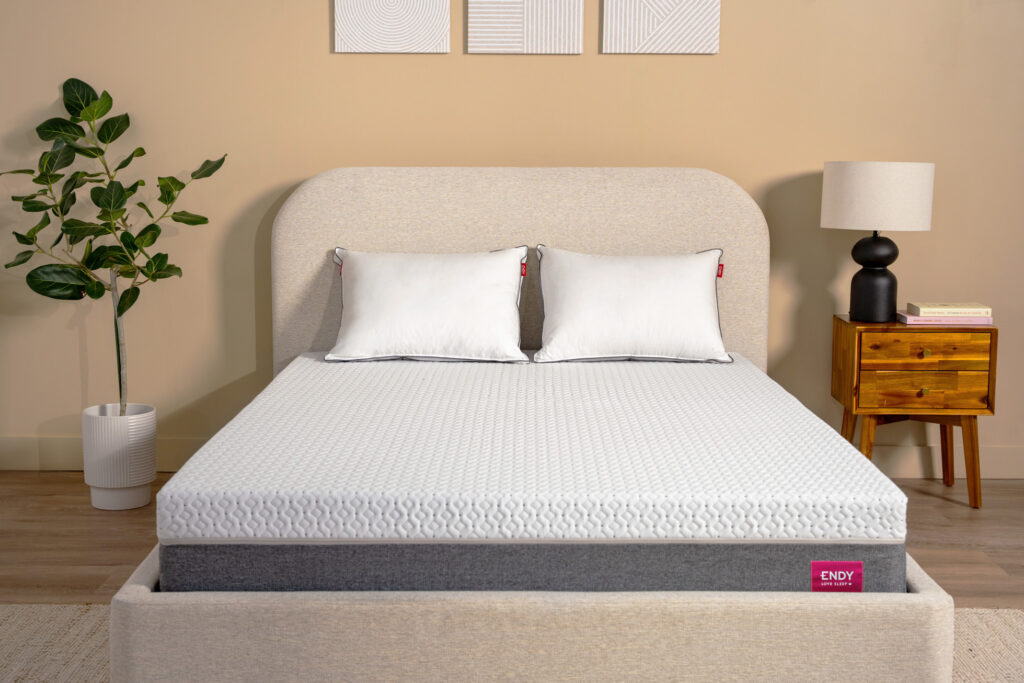
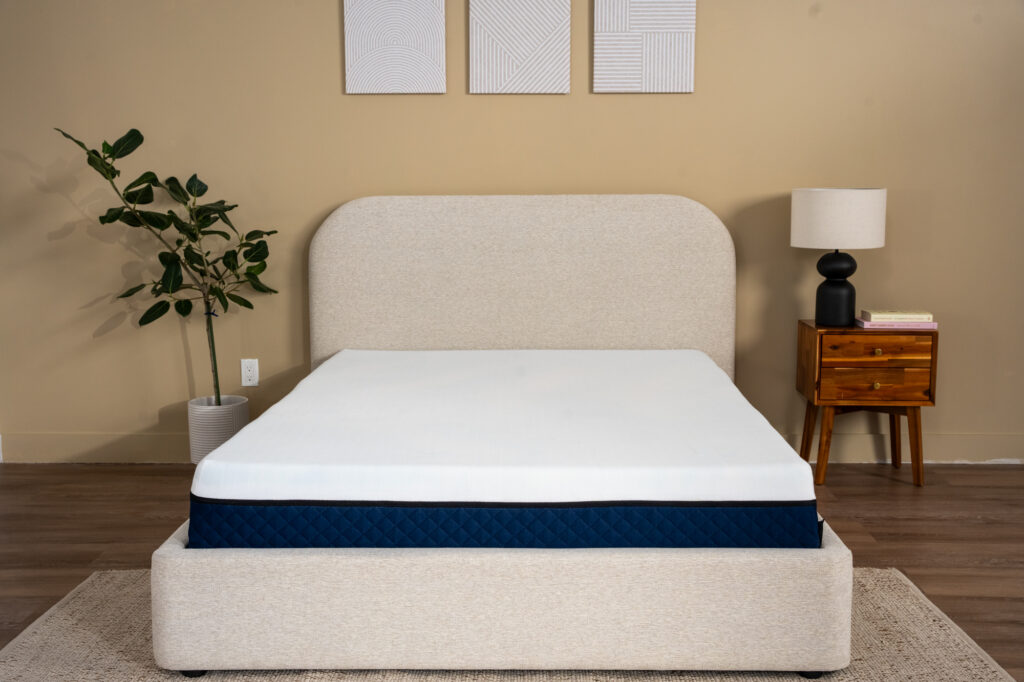
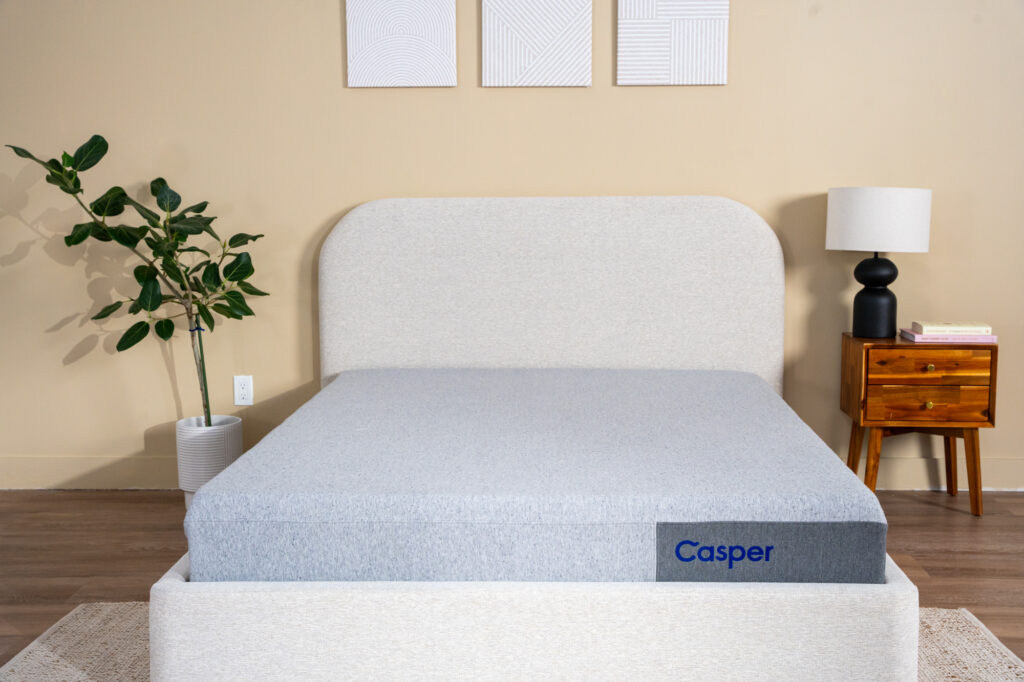
What Is a Hybrid Mattress?
A hybrid mattress combines a pocketed coil support core with substantial foam layers on top. The foam comfort layers — typically memory foam, latex foam, gel foam, or poly foam — provide the contouring and pressure relief associated with all foam mattresses, while the coil support core contributes bounce, airflow, and structural edge support that foam alone cannot replicate.
To qualify as a true hybrid in any meaningful sense, a mattress needs at least 5 cm (2 inches) of quality foam comfort layers above the coil system. Models with only a thin foam topper over springs are better categorised as traditional innerspring beds, not hybrids — a distinction worth making given how loosely the term is used across the mattress industry.
Most hybrid mattresses are available across a wide price range in queen size: entry-level models start around $800–$1,000 CAD, while premium hybrids with natural latex foam comfort layers and zoned coil systems can reach $3,000–$4,000. They’re widely available both online and in-store across Canada, with most major Canadian mattress brands now offering at least one hybrid option.
Coil Types in Hybrid Mattresses
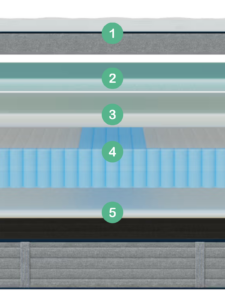
The Endy Hybrid Mattress Construction
The coil system inside a hybrid mattress shapes its feel, durability, and performance more than most buyers realise. Not all coil systems are equal, and understanding the key differences helps you evaluate hybrid options accurately.
Pocketed coils (individually wrapped or individually encased coils) are the gold standard for hybrid mattresses. Each coil is wrapped in its own fabric pocket, allowing it to compress independently in response to localised weight. This independent response is what gives pocketed coils their motion isolation advantage over other coil systems, their superior contouring ability, and their quieter performance under movement. Most hybrid mattresses worth considering use pocketed coils as their support core.
Bonnell and continuous coil systems are interconnected — when one coil compresses, neighbouring coils respond too. This produces more motion transfer and less targeted support than pocketed coils. Bonnell coils are durable and cost-effective but are better suited to traditional spring mattresses than hybrids, where the expectation is a more refined sleep surface.
Microcoil and zoned coil variations represent the premium end of hybrid construction. Microcoils are smaller-diameter coils sometimes added as an additional comfort layer directly beneath the foam comfort layers, providing a more nuanced response to body weight. Zoned coil systems use varying coil gauges across different zones of the mattress — firmer wire under the lumbar region, softer under the shoulders — to provide targeted support across body zones. Both features improve pressure relief and spinal alignment compared to uniform coil systems.
Best Hybrid Mattresses
The best hybrid mattresses are ones with good edge support, response and bounce. While hybrid mattresses may be more expensive than memory foam mattresses, they may be more suitable for certain sleepers. Here are top picks for Best Hybrid Mattress in Canada 2026.
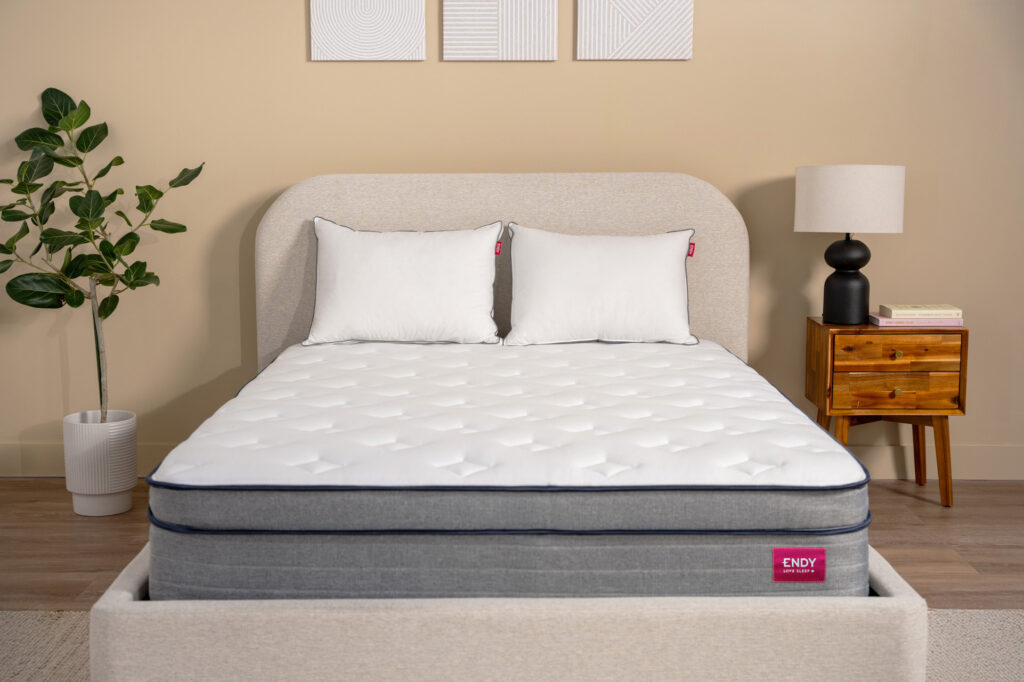
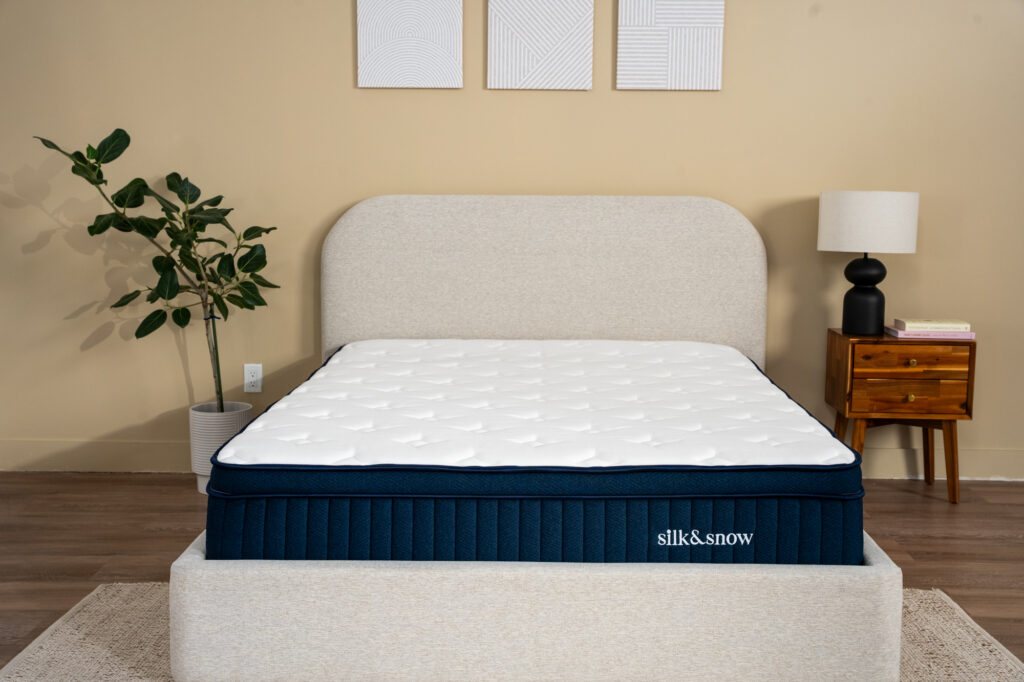
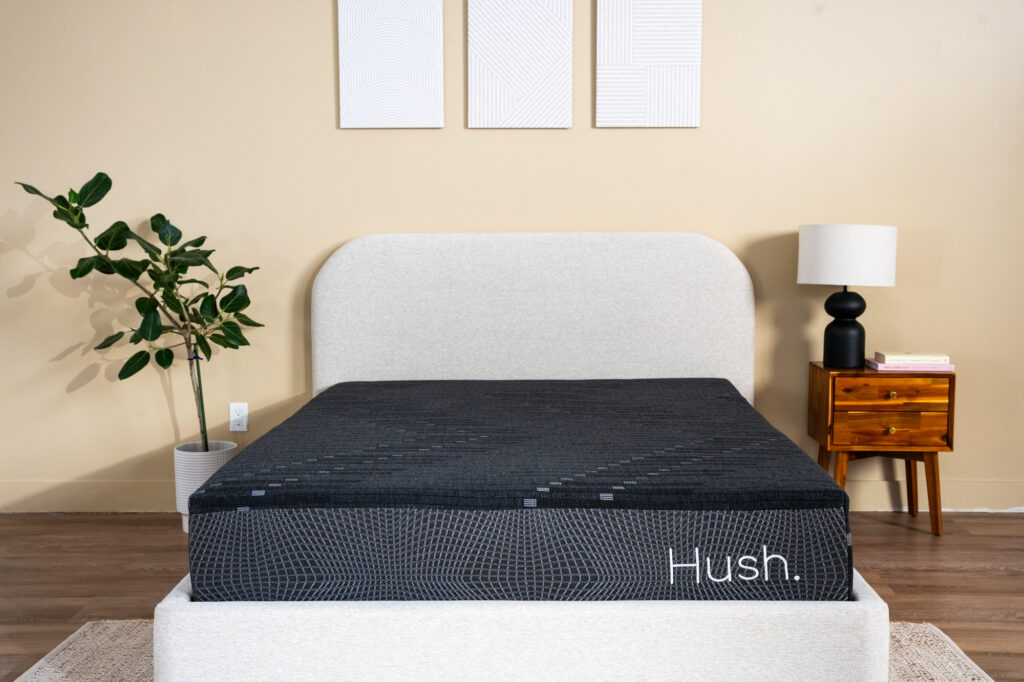
Performance Comparison: Foam vs Hybrid Mattresses
Pressure Relief
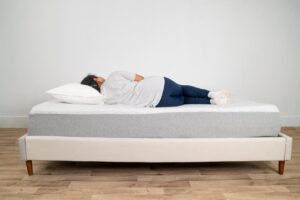
Memory foam mattresses deliver excellent pressure relief — consistently the strongest performance metric for this mattress type. The deep contouring of memory foam layers distributes weight across a broad surface area, reducing peak pressure at the hips, shoulders, and knees. This makes memory foam mattresses the preferred recommendation for side sleepers, and a strong choice for anyone with joint pain.
Hybrid mattresses offer excellent pressure relief too, particularly models with thick memory foam or latex foam comfort layers over zoned pocketed coils. The coil system adds a degree of pushback that prevents the excessive sinkage some sleepers experience in softer all foam mattresses. On average, hybrids show slightly more sinkage than all foam options — 2.31 inches versus 2.17 inches in comparable testing — but both remain within a comfortable range for most sleepers.
Motion Isolation
This is where all foam mattresses hold a clear advantage. Memory foam mattresses absorb kinetic energy within the foam itself, preventing it from travelling across the sleep surface. Foam and hybrid mattresses both perform well here relative to traditional spring beds, but memory foam mattresses typically outperform hybrid mattresses in direct motion transfer testing. For light sleepers sharing a bed with a restless partner, excellent motion isolation is one of the most compelling reasons to choose memory foam over hybrid.
Hybrid mattresses with high-quality pocketed coils narrow this gap considerably — individually encased coils respond independently, which limits cross-mattress motion transfer compared to interconnected coil systems. But minimal motion transfer remains a memory foam strength.
Responsiveness and Ease of Movement
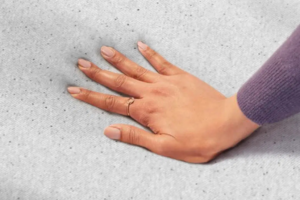
Hybrid mattresses win on responsiveness. The coil systems in hybrid mattresses create more bounce and faster surface recovery when weight is removed or shifted. This makes it easier to change positions during the night — a meaningful advantage for combination sleepers who move frequently. Memory foam’s slow response can feel restrictive when repositioning, and some sleepers find the sinking feeling of deep memory foam comfort layers makes rolling over require noticeable effort.
Breathability and Cooling
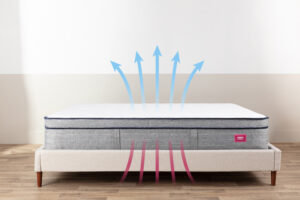
Hybrid mattresses offer better airflow than most foam mattresses because the open channels between coils allow continuous air circulation through the support core. Even without specific cooling foam features, a hybrid mattress sleeps cooler than an equivalent all foam mattress in most real-world conditions.
Memory foam mattresses retain heat by nature — the dense foam structure traps warm air, and heat dissipates slowly. Modern foam mattresses combat this with gel foam layers, phase change material covers, and open-cell foam structures. These features genuinely improve temperature regulation, but most all foam mattresses still do not match the cooling performance of a well-constructed hybrid. Hot sleepers who sleep hot consistently will almost always be more comfortable on a hybrid.
Durability and Lifespan
Memory foam mattresses last longer on average — typically 10 to 15 years for quality models, compared to 10 to 12 years for most hybrid mattresses. The coil systems in hybrid mattresses introduce mechanical components that can fatigue over time, while high-density all foam constructions degrade more slowly when properly maintained. That said, a high-quality hybrid with thick coil gauge and dense foam comfort layers can easily reach 12 years without significant performance degradation.
Price and Value
Memory foam mattresses are typically less expensive than hybrid mattresses at equivalent quality tiers. A quality all foam mattress in queen size runs $600–$1,500 CAD; an equivalent hybrid starts around $1,000–$1,500 and can exceed $3,000 for premium models. The price premium on hybrids reflects the complexity of their construction — coil systems, individually encased pockets, and multiple foam layers cost more to manufacture. Whether the premium is justified depends entirely on your personal preference and which performance metrics matter most to you.
Edge Support: Foam or Hybrid?
Hybrid mattresses offer better edge support than most memory foam mattresses — and this difference is significant in practice. The coil support core in a hybrid extends to the mattress perimeter, providing structural resistance against compression at the edges. This means you can sleep close to the edge without rolling off, and sitting on the edge of the bed to get dressed is stable rather than unstable.
Memory foam mattresses rely on a higher-density foam perimeter for edge reinforcement, which compresses more under load than a coil-reinforced edge. In edge sinkage testing, memory foam mattresses show approximately 5.2 inches of compression when seated at the edge, versus roughly 3.75 inches for a comparable spring-based mattress.
If you’re evaluating a new mattress in-store, test edge stability by sitting fully on the edge and observing how far it compresses. A good hybrid should feel stable and supportive; an all foam mattress may feel like it’s tipping you off.
Some foam mattress manufacturers improve edge support by increasing the density of the perimeter foam or adding a separate high-density foam border. This helps, but a well-constructed hybrid still tends to provide better edge support.

Hot Sleepers and Cooling Strategies
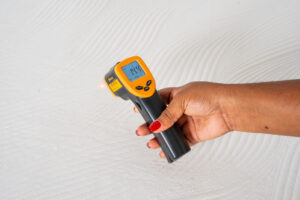
For hot sleepers, the choice between memory foam vs hybrid is often decided by cooling performance alone. Hybrid mattresses have a structural advantage: coil systems create open air channels throughout the support core, allowing heat to escape naturally. This passive airflow is difficult to replicate in all foam constructions regardless of foam engineering.
That said, modern foam mattresses have closed the gap considerably. Cooling foam technologies worth looking for in an all foam mattress include gel foam comfort layers, copper infused foam, phase change material mattress covers, and open-cell foam structures that increase airflow through the material.
If you choose a memory foam mattress and sleep hot, a cooling mattress topper — typically latex foam or gel foam — can meaningfully improve surface temperature. Breathable linen or Tencel sheets also help by wicking moisture away from the surface.
Motion, Bounce, and Intimacy Considerations
Bounce matters more than most buying guides acknowledge. For couples, a mattress with more bounce and responsiveness tends to perform better for intimacy — the surface responds immediately to movement rather than absorbing it. Hybrid mattresses, with their coil-driven more bounce and faster recovery, consistently outperform memory foam on this measure.
For co-sleepers who are disrupted by a partner’s movement, the calculus reverses. Memory foam mattresses provide excellent motion isolation — the foam absorbs and dissipates movement before it crosses the sleep surface. Partners who change positions frequently through the night, get up early, or have significantly different body weights will cause less disturbance on a memory foam surface than on a hybrid.
For active repositioners — combination sleepers who rotate between back, side, and stomach — a hybrid mattress’s responsiveness makes changing positions easier and more natural. The sinking feeling of deep memory foam layers can feel restrictive when rolling over, particularly in softer all foam constructions.
Who Should Choose a Memory Foam Mattress
Choose a memory foam mattress if:
- You are a side sleeper who needs deep pressure relief at the hips and shoulders. Memory foam contours closely to the body’s shape, reducing peak pressure at bony contact points more effectively than most hybrid configurations.
- You share a bed with a restless partner and need minimal motion transfer. All foam mattresses provide excellent motion isolation that even the best pocketed coil hybrid can’t fully replicate.
- You want deep contouring and an enveloping, cradling feel from your sleep surface.
- You’re a budget-conscious shopper who wants quality contouring and pressure relief without the cost premium of a hybrid.
- You have joint pain, where sustained pressure relief through the night directly affects pain levels.
Who Should Choose a Hybrid Mattress
Choose a hybrid mattress if:
- You sleep hot and cooling performance is a non-negotiable priority. Most hybrid mattresses offer better airflow than all foam alternatives by a meaningful margin.
- You need better edge support — for sleeping close to the edge, for ease of getting in and out of bed, or because you use a significant portion of the mattress surface.
- You want more bounce and responsiveness from your sleep surface, whether for ease of repositioning or for intimacy.
- You’re a heavier sleeper (above 230 lbs/105 kg) who may compress foam comfort layers too deeply, reducing their effectiveness. Hybrid mattresses offer structural coil support that foam alone may not sustain under higher body weight.
- You’re a combination sleeper who changes positions frequently and needs a surface that responds quickly.
All-Foam vs Hybrid: Longevity, Maintenance, and Price
Memory foam mattresses generally outlast hybrids. Quality all foam models last 10 to 15 years; most hybrid mattresses last 10 to 12 years before coil fatigue or foam compression becomes noticeable. The coil systems in hybrid mattresses are the most common point of failure — metal fatigue and foam compression around the coils are the first signs that a hybrid is reaching the end of its useful life.
Maintenance tips for foam mattresses: Rotate (head to foot) every three to six months to distribute wear evenly. Use a waterproof mattress protector from day one — foam absorbs moisture and is difficult to clean once saturated. Most foam mattresses do not need to be flipped.
Maintenance tips for hybrid mattresses: Rotate every three to six months as with foam. A mattress protector is equally important to protect foam comfort layers from moisture. Check periodically for coil noise — squeaking that develops over time suggests coil wear.
Both foam and hybrid mattresses typically come with 10-year warranties in the Canadian market, though well-established brands, such as Endy and Silk & Snow, may offer 15 years. Review sag thresholds carefully — a warranty that only activates at 1.5 inches of sag offers less real protection than one that activates at 1 inch.
Regarding foundation requirements: both mattress types generally perform best on a solid platform foundation or slatted base with slats no more than 7–8 cm apart. A traditional box spring is not recommended for either type — it doesn’t provide the even surface support that foam layers and hybrid coil systems require to perform correctly.
Conclusion and Recommendation
The hybrid mattress vs memory foam decision ultimately comes down to which performance trade-offs matter most to you.
Memory foam mattresses are the stronger choice when pressure relief, motion isolation, and value are the priorities. They deliver deep contouring that few hybrid constructions match, outstanding motion isolation for co-sleepers, and long-term durability at a lower price point than most hybrids. The primary concessions are cooling and bounce.
Hybrid mattresses are the stronger choice when cooling, edge support, responsiveness, and structural support for heavier body types are the priorities. They deliver better airflow, a more balanced feel that suits combination sleepers, and the kind of robust edge support that foam mattresses struggle to replicate. The primary concessions are motion isolation and price.
Best-for summary:
- Memory foam: Side sleepers, couples sensitive to motion, joint pain sufferers, budget-conscious shoppers, those wanting deep contouring
- Hybrid: Hot sleepers, combination sleepers, heavier individuals, those needing strong edge support, those who prefer a bouncier feel
There’s no wrong answer if you match the mattress to your actual sleeping preferences. Use the checklist above, take the full trial period seriously, and let your body — rather than marketing — make the final decision.
About Our Author